Soft-Shelled Chicken Eggs: Causes and What to Check
Coopgauge is reader-supported. When you buy through links on this page, we may earn a commission.
Soft-shelled chicken eggs are eggs whose shell never finished forming. The shell is the last job in a build that takes 25 to 26 hours. One soft egg is usually no crisis. It often comes from a pullet's first weeks. Hot spells do it too. A run of them is a feed question. Check your bag, your dish and your water, in that order.
- Time to form one egg
- 24 to 26 hours (Ohio State)
- Where the shell goes on
- the shell gland, the last 20 or more hours (eXtension)
- Layer feed protein
- 15 to 19% light breeds; 14 to 16% dual-purpose
- Layer feed calcium
- at least 2.5 to 3.5%
- Oyster shell
- free choice, its own dish, never mixed into the feed
- First eggs
- 18 to 22 weeks old
- Water per hen
- 0.06 gal a day mild; 0.11 gal hot
- Bone calcium
- 47% of a shell; the feed supplies the rest
Egg timing: Ohio State Extension VME-0021, as checked on our eggs per day page, and eXtension, Avian reproductive system: female. Feed protein, calcium and the shell dish: University of Maine Bulletin #2222. First eggs: Wisconsin Extension. Water: University of Kentucky, Table 12.1. Bone calcium: eXtension.
Every number on this page sits on a bag, a dish or a bucket. Shell trouble reads like a bird problem and checks like a feed problem. You do not have to guess which. The bag and the dish tell you.
Soft, thin or shell-less
The three states below are not one fault. Tell them apart in your hand. A soft shell started and quit early. A thin shell finished but came out weak. A shell-less egg skipped the shell step entirely.
| State | What you hold | When it usually shows up | Check first |
|---|---|---|---|
| Soft-shelled | A shell that started but did not finish; the surface dents under light pressure | In a run, not as a single egg | The calcium row of the causes table |
| Thin-shelled | A full, even shell that cracks easy | After a feed change, or in a hot spell | The wrong bag row |
| Shell-less | Only the membrane, egg-shaped and soft; eXtension says it feels like a water balloon | Once in a while, from one bird | The calcium and water rows |
| A firm mass | A firm mass that is not egg-shaped and has no shell | Not an egg fault at all | Not on this page; forums call it a lash egg |
Forums write soft shelled, thin and shell-less for all of them. A chicken laying soft eggs may hold any one of the three.
This page keeps the words apart, because each state has a different first check. The split is our structure. The numbers behind it come from the sources at the end.
Hold yours against the table and take the row that fits. The row hands you a place to start. Not a verdict.
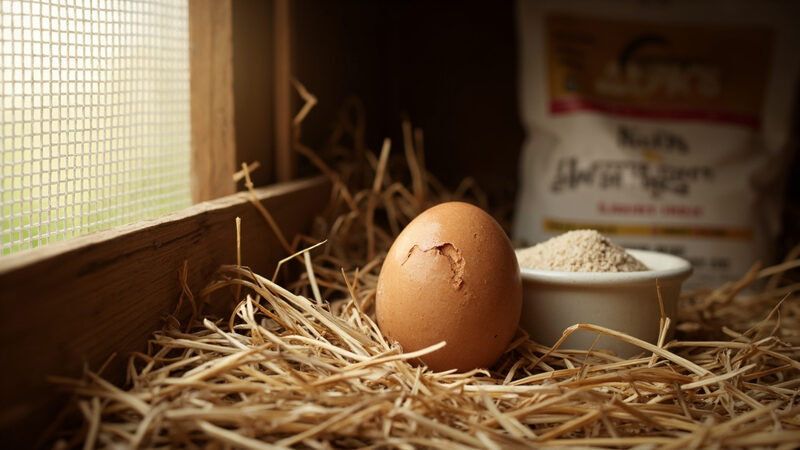
Why the shell comes out soft
Thin egg shells in chickens usually trace back to the last stage of the build. An egg is not filled in one pass. It moves down a tube inside your hen, and the shell goes on at the end.
The trip has four stops, by eXtension. The yolk picks up the albumen in about 3 hours. Shell membranes wrap it in the next 75 minutes. Then the shell gland holds the egg for 20 or more hours. That is where the shell goes on, as calcium carbonate.
Our eggs per day page carries the same clock. There it sets the rhythm. Here it decides where a shell can fail.
Run the clock backwards from a dawn egg. Its shell gland hours fall overnight (our math from the stage times). If a shell quits mid-shift, you find the unfinished part first thing.
The clock also sets your repair window. The shell you hold this morning was built on yesterday's feed and yesterday's water (our math from the stage times). Today's fix lands on the next egg, not on that one.
The calcium in that shell has two accounts. The hen pulls 8 to 10 percent of her body calcium from bone, and bone supplies 47 percent of a shell. The feed supplies the rest. Short the feed, and the shell pays first.
Your part of the account is small. Read the tag. Look at the dish. A full label and an empty dish produce different shells. That is why the number comes before the fix in the table.
Now put your own carton against the two accounts. A dozen shells from one hen tell you about her week. A dozen from the whole flock tell you about the dish.
eXtension prints the one-off rule plainly: the occasional shell-less egg is not necessarily an indication of problems. You count, and the count decides.
| Factor | The number to check | What the shell does | Who owns the fix |
|---|---|---|---|
| Pullet at first lay | First egg at 18 to 22 weeks; first eggs run small until about 30 weeks | Runs small, with the odd one-off shell | When chickens start laying |
| Calcium supply short | Label calcium 2.5 to 3.5%; the dish free choice, never mixed | Soft or shell-less eggs in a run | Grit and oyster shell |
| Wrong bag | Protein 15 to 19% light breeds, 14 to 16% dual-purpose | Thin shells that crack easy | What to feed chickens |
| Hot spell | Water about 0.11 gal a hen; feed intake drops in hot weather | Thinner shells while the heat holds | The water step below |
| Older hen | Shell quality drops each year, by eXtension | Thinner shells year over year | Why chickens stop laying, the age check |
Two rows on that table are not feeding faults at all. A pullet's first eggs run small, and an older hen's shells thin out year over year, by eXtension. The table keeps them next to the feeding rows so a whole-flock count comes before a feed change.
You can tell those two rows apart from a feed fault by your calendar. The pullet row matches a young flock. The older row matches a flock past its second year. The feeding rows match everyone.
The row that ends with a purchase is the calcium row. When the dish is missing, the shell has nowhere to draw from but the feed, and the feed was never sized to carry the whole job.
The box above is the standing calcium source for that dish. The listing calls its shells pure and flaked, with no bleach, coral or filler shells, in a 4 lb pouch.
University of Maine's serving rule is a dish of its own, free choice. The bag fills the dish. The dish is what the flock reads. Fill yours when you top up the feed. One trip, two jobs.
What to change, in order
Work the list in order, and stop at the first row that fails. You can run all four checks in one walk to the run. Two are on the bag. Two stand in the run already.
- Read the feed bag. It should say layer feed, with 15 to 19% protein for light breeds, 14 to 16% for dual-purpose birds, and at least 2.5 to 3.5% calcium.
- Set out the oyster shell dish. Free choice, in a dish of its own, never poured into the pellets.
- Raise the water in the heat. Plan about 0.11 gal a hen on a hot day, up from 0.06 in mild weather.
- Give the pullet time. First eggs land at 18 to 22 weeks and run small until about 30 weeks.
Order matters. The first two steps cover most runs of soft eggs, and both cost nothing to check.
The third step is the one keepers miss. In hot weather feed intake drops, by eXtension. Less feed means less calcium in the day.
Your waterer size decides how often you walk out. Six hens at 0.11 gal drink about 0.66 gal between them (our math). Our waterer page sizes the container for that.
The drawing above is the whole rig. Layer feed stays in the feeder it already had. Shell stands in the second dish. Nothing crosses between them. A dish poured into the pellets turns the ration into someone else's mix, which is what the serving rule forbids.
There is no published per-bird rate for shell. The dish is the measure: refill when the bottom shows, as our grit and oyster shell page puts it.
The 4 lb pouch of flaked oyster shell from the first box is the standing refill for your dish. Keep it dry, and keep the scoop with it.
The dish above is the second container of the rig. It holds 8 cups, 64 oz, and the ceramic body is listed as heavy enough to resist a knock.
A flipped shell dish feeds nobody. You want the weight. You also want it where you will see it.
By bird and by season
A flock that stops laying is a different question. If your hens lay nothing at all, the 8 checks on our why chickens stop laying page own it. A soft or thin shell on an egg that did come out is the case the table below covers.
| Situation | What counts as normal | What to change |
|---|---|---|
| Pullet, first weeks of lay | First eggs run small until about 30 weeks | Nothing yet; keep the layer feed switch at the first egg |
| Peak-year hen | A hard shell is the normal case | Soft or thin in a run: work the calcium row |
| Older hen | Shell quality drops each year, by eXtension | Thin shells year over year point at flock age, not the dish |
| Hot spell | Water up to about 0.11 gal; feed intake drops | Keep water in front of the flock; the water step owns the rest |
| One soft egg among dozens | Not, by itself, a fault, by eXtension | Note the count; a run is the trigger for the check list |
Count the odd eggs, not just the odd one. One soft shell in a carton is a note on your calendar. Four in a week is the trigger.
The count also settles the pullet question. First eggs run small, and a one-off odd shell is not, by itself, a fault, by eXtension. If your young flock keeps producing them, run the same two checks as everyone else.
Nothing on this page needs a meter. You need the tag on your feed bag, a dish that exists, and a bucket that stays full. The count on your calendar finishes the job.
Common Questions
What does it mean when a chicken lays a soft egg?
Usually that the shell run stopped early. The shell is the last stage of a 25 to 26 hour build, and the gland that forms it holds the egg for 20 or more hours. A chicken laying soft eggs once is often a pullet in her first weeks or a bird short of water in a hot spell. A run of them points at the calcium supply: the bag and the dish.
Are soft-shelled eggs and eggs without shells the same thing?
Not quite. A soft-shelled egg started and quit, so it carries partial shell. Eggs without shells never got any: only the membrane comes out, and eXtension says one feels like a water balloon. A thin shell finished but cracks easy. One more line: a firm mass is sometimes called a lash egg. It is not an egg, and it is not covered on this page.
Why do soft eggs turn up overnight or first thing in the morning?
Because of where the hours fall. An egg due at dawn spends its gland hours overnight, and those are the shell hours (our math from the stage times). If the shell run quits mid-shift, the nest box holds the unfinished part first thing. No source we cite prints a laying hour, so the check is your own nest box at dawn.
Do pullets lay soft eggs when they start laying?
The first eggs run small, by Vermont Extension, with normal size by about 30 weeks. That is the size account, not the shell account. A one-off odd shell early in lay is not, by itself, a fault. If a young flock keeps turning out soft or shell-less eggs, the same two checks apply: the layer feed switch happened, and the dish exists. Our first-egg page has the weeks.
Does hot weather cause soft eggs?
It moves the numbers. A hen drinks about 0.11 gal on a hot day, up from 0.06 in mild weather, by Kentucky. Feed intake drops in hot weather too, and less feed means less calcium in the day. That chain ends at the shell. Keep water in front of the flock, and work the check list when the heat breaks.
How should oyster shell be served?
Free choice, in a dish of its own, never mixed into the pellets, by University of Maine. The hens take what they need when the dish stands apart. Poured into the feed, the ration stops being theirs to balance. Our grit and oyster shell page has the serving rules and the pullet exception.
Read next
- GuideWhy chickens stop laying eggs
- GuideWhen chickens start laying
- DataEggs per day
- FeedGrit and oyster shell
- FeedWhat to feed chickens
- HubChicken breeds
Sources
- Ohio State University Extension, VME-0021 The Making of an Egg (2022), as checked on our eggs per day page: ohioline.osu.edu and eggs per day (24 to 26 hours to produce one egg)
- Extension Foundation, Small and backyard poultry, Avian reproductive system: female, by Jacquie Jacob, University of Kentucky (read 2026-11-26): poultry.extension.org (about 25 to 26 hours in total; the yolk spends 15 to 17 minutes in the infundibulum, about 3 hours in the magnum where the albumen forms, 75 minutes in the isthmus where the shell membranes form, and 20 or more hours in the shell gland, where the shell forms as calcium carbonate; the hen mobilizes 8 to 10 percent of body calcium from bone, and bone calcium provides 47 percent of the calcium in a shell; a shell-less egg feels like a water balloon; the occasional shell-less egg is not necessarily an indication of problems)
- Extension Foundation, Small and backyard poultry, Feeding chickens for egg production (read 2026-11-26): poultry.extension.org (during hot weather, feed intake decreases; laying mashes typically contain 2.5 to 3.5% calcium; ground oyster shell may be offered on a free-choice basis; if hens produce eggs with thin shells or shells that are easily cracked, oyster shell might help)
- Extension Foundation, Small and backyard poultry, Managing backyard chickens during extreme summer temperatures (read 2026-11-26): poultry.extension.org (egg production decreases in extreme heat due to the decrease in feed intake; reduced intake leads to reduced calcium, which could affect eggshell quality)
- Extension Foundation, Small and backyard poultry, Raising chickens for egg production (read 2026-11-26): poultry.extension.org (egg size increases and shell quality decreases each year; many home flocks produce eggs on and off for 3 to 4 years)
- University of Maine Cooperative Extension, Bulletin #2222 Nutrition for Backyard Chicken Flocks in Maine: extension.umaine.edu (layer feed 15 to 19% protein for light breeds and 14 to 16% for dual-purpose birds; calcium at least 2.5 to 3.5%; oyster shell free choice in its own dish)
- University of Wisconsin–Madison Extension, Life Cycle of a Laying Hen: livestock.extension.wisc.edu (the first egg at 18 to 22 weeks old)
- University of Vermont Extension, Layer Poultry Record: uvm.edu (PDF) (first eggs often small, normal size by about 30 weeks)
- University of Kentucky, Poultry Production Manual, Chapter 12 Introduction (Table 12.1 water consumption): afs.mgcafe.uky.edu (about 0.06 gal a hen a day at 68 °F and about 0.11 gal in the heat)
- This site's grit and oyster shell page: grit and oyster shell (shell free choice in its own dish; no published per-bird rate, so the dish is the measure; read 2026-11-26)
- This site's when-do-chickens-start-laying page: when chickens start laying (first-egg window by breed class; first egg size line from Vermont Extension; read 2026-11-26)
- Flake content, shell purity and bag size: maker listing on Amazon, ASIN B00UIM7N0A, read 2026-11-27
- Crock dish capacity, diameter, material and anti-tip build: maker listing on Amazon, ASIN B0002AS5QY, read 2026-11-26
- The soft, thin and shell-less split, the check order and the dawn math: our structure. The numbers behind them are the sources above.
How we pick and check numbers: How we research.