How Many Eggs Does a Chicken Lay a Day? At Most One
A hen lays at most one egg a day. Each egg takes 24 to 26 hours to form, so she lays a little later each day and then skips a day. A good layer gives about 6 eggs a week in her first two years.
- Most per day
- 1
- Time to form one egg
- 24 to 26 hours
- Typical week
- about 6 eggs
- First eggs
- about 18 to 22 weeks old
- Peak years
- first 2 years
- Laying years
- 3 to 4 for most flocks
- Daylight for laying
- 14 to 16 hours
Egg timing: Ohio State Extension VME-0021 and Wisconsin Extension. Six a week, peak years: Minnesota Extension. First eggs and laying years: Wisconsin Extension.
Ohio State Extension says it takes about 24 to 26 hours for a hen to make an egg. Wisconsin Extension explains what that means. A hen releases a new yolk after she lays, so each egg comes a little later in the day. When it gets too late, she skips a day and starts again.
That is why a strong layer still skips a day. Minnesota Extension says a laying hen gives roughly six eggs a week. A hen that lays five or six days out of seven is doing well.
Eggs per day by flock size
| Hens | Eggs a week (6 each) | Eggs a day, average | Dozens a week |
|---|---|---|---|
| 2 | 12 | about 2 | 1 |
| 3 | 18 | about 2.5 | 1.5 |
| 4 | 24 | about 3.5 | 2 |
| 6 | 36 | about 5 | 3 |
| 10 | 60 | about 8.5 | 5 |
| 12 | 72 | about 10 | 6 |
Use the table to size your flock. A family that eats two dozen eggs a week needs about four hens in their peak years. Plan one or two more for winter and for older hens. A simple rule works for most families. Count the eggs you eat in a week, divide by six, and add one hen. That gives a small cushion for slow weeks and short winter days. Three hens give about a dozen and a half a week in good months.
The table assumes every hen is in her prime. A real flock mixes ages and breeds. Older hens lay less, and a broody hen stops laying while she sits. Count on fewer eggs than the table in a mixed flock, and you will rarely be short.
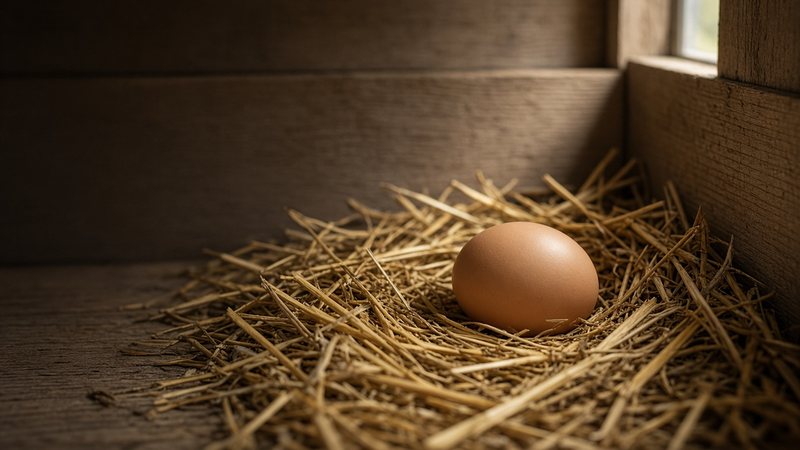
How long a hen keeps laying
Wisconsin Extension says hens start laying at about 18 to 22 weeks old, depending on breed. Ohio State gives 20 to 22 weeks. Minnesota Extension puts it at around six months. Light breeds start early; heavy breeds a little later.
Laying peaks early. Minnesota Extension says peak production comes in the first two years. Wisconsin Extension says most flocks lay for 3 to 4 years, and egg count, egg size and shell quality fall each year. Hens may live 6 to 8 years in a backyard flock.
Wisconsin Extension suggests adding young hens every 2 to 3 years to keep a small flock laying. Many keepers add two or three pullets each spring. The older hens keep their place in the flock, and the young ones keep the egg basket full.
Retired hens still earn their keep. They eat pests in the garden, turn compost and add to the bedding pile. Many families keep them as pets for the rest of their lives. Plan coop space for them when you add new birds.
Light and seasons
Day length drives laying. Wisconsin Extension says maximum production comes with about 16 hours of daylight in summer. Hens need 14 to 16 hours of light to keep laying through the year. Minnesota Extension gives at least 12 to 14 hours.
In fall and winter, the days get short and laying slows. Hens lay less in fall. Short days do the same in winter. Both are normal parts of the year.
Some keepers add light. Wisconsin Extension suggests a timer and a 60-watt bulb that adds light in the morning and late afternoon. Let the hens go to roost with the setting sun. Others give the hens a winter break and enjoy the spring rush.
Either choice is fine for a backyard flock. If you add light, add it slowly and keep the schedule steady. A sudden change in day length can confuse the flock. A plug-in timer makes the routine automatic. Set it once in early fall and leave it alone until spring, when the days grow long again on their own.
Breed makes a difference
| Breed | Eggs per year | Eggs a week, about |
|---|---|---|
| Leghorn | 250 to 300 | 5 to 6 |
| Australorp | about 250 | 5 |
| Easter Egger | 200 to 280 | 4 to 5 |
| Orpington | 150 to 280 | 3 to 5 |
| Plymouth Rock | about 200 | 4 |
| Marans | 180 to 200 | 3.5 to 4 |
| Silkie | 100 to 120 | 2 |
Breed sets the ceiling. A Leghorn can lay 250 to 300 eggs a year, by The Livestock Conservancy. A Silkie lays 100 to 120. Most dual-purpose breeds land around 200. Four hens at 6 eggs a week give about 24 eggs, or two dozen. Our best egg layers page compares more breeds.
Egg count is not everything. Leghorns are light, active birds that lay white eggs. Australorps and Plymouth Rocks are calm, heavier birds with brown eggs. Easter Eggers lay blue or green eggs. A mixed flock trades a few eggs for a colorful carton and a calmer yard.
Simple ways to keep hens laying
Feed a complete layer feed once hens start laying. The feeding guide covers the switch. Keep fresh water in front of them all day. Give each hen 4 sq ft of coop floor and a dim nest box, 1 per 4 hens.
Collect eggs often. Minnesota Extension suggests picking up eggs twice a day. Clean, dry nest boxes keep eggs clean, and a calm coop keeps hens laying in the boxes rather than in corners.
Small changes can cause a short pause. A move to a new coop, new birds in the flock or a scare from a predator can stop laying for a few days. Keep the routine steady and the coop quiet, and the hens settle back in.
Watch for hidden nests if eggs seem to drop off in summer. Free-range hens sometimes lay under shrubs or in a quiet corner of the shed. Keeping them in the run until mid-morning teaches them to use the nest boxes.
Common Questions
Can a chicken lay two eggs a day?
Not as a rule. Each egg takes 24 to 26 hours to form, by Ohio State Extension.
How many eggs does a chicken lay a week?
About six for a good layer in her peak years, by Minnesota Extension.
At what age do hens start laying?
About 18 to 22 weeks, depending on breed, by Wisconsin Extension.
Why did my hens stop laying in winter?
Short days. Hens need 14 to 16 hours of light to keep laying, by Wisconsin Extension. Hens also lay less in fall.
How many eggs does a chicken lay a year?
Use the breed ranges on this page. A Leghorn is 250 to 300 and a Silkie is 100 to 120. Minnesota Extension says a good layer gives about 6 eggs a week in her peak years. We do not turn that week into a new yearly figure.
Read next
- DataBest egg laying chickens
- DataShell colors by breed
- DataNesting boxes for chickens
- HubChicken breeds
Sources
- Ohio State University Extension, VME-0021 The Making of an Egg (2022): ohioline.osu.edu (24 to 26 hours to produce an egg; laying starts at 20 to 22 weeks)
- University of Wisconsin–Madison Extension, Life Cycle of a Laying Hen: livestock.extension.wisc.edu (18 to 22 weeks; 14 to 16 hours of light; maximum with 16 hours; ovulation every 24 to 26 hours; 26 hours to form; skips a day; flocks lay 3 to 4 years; live 6 to 8 years; add pullets every 2 to 3 years; timer and 60-watt bulb)
- University of Minnesota Extension, Raising chickens for eggs (reviewed 2025): extension.umn.edu (laying at about six months; 5 to 10 years; peak first two years; roughly six eggs a week; 12 to 14 hours of light; pick up eggs twice a day)
- The Livestock Conservancy, Heritage Chicken Breed Comparison Chart (2026): livestockconservancy.org (Leghorn 250 to 300; Australorp about 250)
- The Livestock Conservancy, Plymouth Rock chicken breed facts: livestockconservancy.org (Plymouth Rock around 200)
- Cackle Hatchery, Easter Egger breed facts: cacklehatchery.com (Easter Egger 200 to 280)
- Cackle Hatchery, Buff Orpington breed facts: cacklehatchery.com (150 to 280 eggs)
- Cackle Hatchery, French Black Copper Marans breed facts: cacklehatchery.com (Marans 180 to 200)
- Townline Hatchery, White Silkie Bantam breed facts: townlinehatchery.com (Silkie 100 to 120)
How we pick and check numbers: How we research.