Bantam Chickens: Small Hens for Small Yards
Coopgauge is reader-supported. When you buy through links on this page, we may earn a commission.
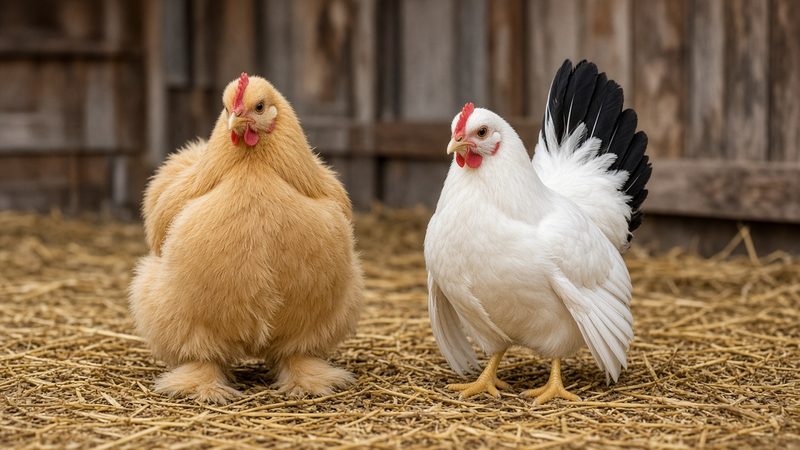
Bantam chickens suit keepers with a small yard, children or a love of pretty birds. Hens weigh about 14 oz for a Serama up to 26 oz for a Cochin Bantam. They lay small cream, white or brown eggs, and some breeds go broody often.
- Size class
- Bantam (APA bantam classes)
- Weight range
- Hen 14 oz (Serama) to 26 oz (Cochin Bantam)
- Eggs per year (range)
- About 50 to 80, or fair, by breed
- Egg color
- Cream, white or brown; small
- Comb type
- Single, rose or other, by breed
- Feather colors
- Many, by breed
- Cold & heat tolerance
- Varies by breed
- Temperament
- Docile (Cochin) to active (Japanese)
- Broodiness
- Poor (Sebright) to very broody (Cochin)
- Space per bird
- 2 sq ft inside, 4 sq ft run
Weights, eggs, temper and broodiness: Cackle Hatchery (Serama, Japanese and Cochin Bantams), Oklahoma State (Sebright). Space: Penn State and our calculator.
A bantam is a small chicken, bred for size. Some are miniature versions of large breeds, such as the Cochin Bantam. Others have no large form at all. Oklahoma State calls the Sebright a true bantam, because there is no standard version of the breed.
The APA groups bantams into their own show classes, by comb and leg feathering. Cackle Hatchery lists the Japanese Bantam under single comb clean legged bantams, and the Cochin Bantam under feather legged bantams.
Size is the big draw. Cackle Hatchery lists the American Serama hen at 14 oz and the rooster at 16 oz, and calls it the smallest chicken breed. A Sebright hen weighs about 20 oz, per Oklahoma State. A Japanese Bantam hen weighs about 22 oz and a Cochin Bantam hen about 26 oz, by Cackle Hatchery.
Small size makes bantams easy to hold. Children can carry a calm one without trouble. A small flock also eats less feed and leaves less to clean up each week. That is why many families start with bantams.
Free-range or confined?
| Setup | Fits bantams? | Space per bird | Notes |
|---|---|---|---|
| Small coop with run | Best fit | 2 sq ft inside, 4 sq ft run | Covered run keeps small birds safe |
| Free range by day | With care | same coop figures | Small birds are easy targets for hawks |
| Mixed with large hens | Possible | size for the large hens | Watch the feeder |
Penn State gives bantams 1 sq ft inside and 4 sq ft of outside run per bird. We use 2 sq ft inside in our calculator, half of the 4 sq ft we give a standard hen. Six bantams need 12 sq ft of coop and 24 sq ft of run.
A covered run is the safer choice. Small birds are easy prey for hawks and owls, and a mesh roof stops both. Our predator-proof guide covers the mesh and latches.
Bantams can share a yard with large hens. Give them a second feeder, so the big birds do not crowd them out. Many keepers house bantams on their own. That keeps the coop math simple.
Coop & run setup
Penn State says bantams need only 4 in of roost space per bird, set 12 to 18 in above the floor. Cackle Hatchery lists a roost height of 0 to 2 ft for Cochin Bantams. Short legs make a low bar the kind choice. Feathered feet stay cleaner on a low perch, too.
Nest boxes can be smaller than the 12 in standard. Plan 1 box per 4 hens, as for any flock. A small kit coop that is too tight for standard hens often fits bantams well.
The RUNSHED listing says 4 to 6 chickens and is 80 in long. That claim is for standard hens. Bantams need about 2 sq ft of house floor, about half of a standard hen. Measure the floor and divide by 2. The listing does not give floor area in sq ft.
Bantams fly better than heavy hens. A Japanese or Sebright can clear a low fence with ease. A covered run solves that, and it keeps hawks out at the same time. If your bantams range by day, plan for a taller fence around the yard.
Feeding
Bantams eat the same complete layer feed as large hens, just less of it. University of Maine says to switch to layer feed when laying begins. Penn State gives bantams 1 linear inch of feeder and water space per bird, against 3 to 4 in for large birds.
Crumbles suit small beaks well. Keep scratch to a small handful the flock clears in 20 to 30 minutes, as University of Maine suggests. Our feeding guide and feeder page cover amounts and a small feeder.
Set out oyster shell in its own dish. Use a small waterer, or a nipple waterer set low, so short birds can reach it. Check both every morning.
Feed lasts longer with a small flock. Buy a bag size you can use within a month or two, and keep it in a sealed bin off the floor. Fresh feed tastes better to the birds.
Hatching: broody hen or incubator?
Broodiness varies a lot between bantam breeds. Cackle Hatchery lists Cochin Bantams as setters and very broody, and lists the American Serama as a setter too. Oklahoma State says Sebright hens have poor brooding instincts, and Cackle lists Japanese Bantams as variable. For the fluffy bantam that sits most often, see the Silkie page.
Eggs take 21 days at 99.5 to 100°F in an incubator, per Texas A&M AgriLife Extension. After the hatch, use the brooder setup guide.
Compared with similar breeds
| Breed | Hen weight | Eggs per year | Egg color | Broodiness |
|---|---|---|---|---|
| Serama | 14 oz | Fair | Cream, tiny | Setter |
| Sebright | 20 oz | 50 to 80 | White, small | Poor |
| Japanese | 22 oz | Fair | Cream or tinted | Variable |
| Cochin Bantam | 26 oz | Fair | Brown, small | Setter |
| Silkie | 2 to 2.5 lb | 100 to 120 | Cream or tinted | Very broody |
Serama
The Serama is a true bantam, with no large form. Cackle Hatchery lists the American Serama hen at 14 oz and the rooster at 16 oz, and says the APA recognized the white variety in 2011.
Eggs are tiny and cream, and production is fair. Cackle lists them as setters, with a roost height of 2 to 4 ft. They were kept as small cage birds, so a small coop with a covered run fits them. Plan 2 sq ft of floor each, the same bantam figure we use for the other birds on this page.
Pros and cons
Pros. A Serama hen is 14 oz, so three birds need about 6 sq ft at 2 sq ft each. Penn State gives bantams 4 in of roost. Several breeds lay small eggs you can still collect, from 50 to 80 a year for a Sebright up to fair counts for a Serama.
Cons. Eggs are small, and a Sebright lays only 50 to 80 a year. Bantams fly, so the run needs a roof. A covered run also keeps hawks off a 14 oz bird.
For a lap bird, the docile Cochin Bantam is a calm choice. The Sebright is a show bird with laced feathers, and Oklahoma State calls it a poor egg breed. The Japanese Bantam is active, with a tail held high.
Where to get chicks
Hatcheries sell bantam chicks in spring, often in mixed boxes. Many sell bantams straight run only, so plan for a rooster or two. Cackle Hatchery limits sexed bantams on some breeds. Buy at least three, so the birds have company.
Check your town rules before you order. Some towns allow hens but not roosters, and bantam roosters crow like any other. If roosters are out, look for a hatchery that sells sexed bantam pullets of your breed.
Common Questions
How big are bantam chickens?
Hens weigh about 14 oz for an American Serama, 20 oz for a Sebright and 26 oz for a Cochin Bantam, by Cackle Hatchery and Oklahoma State.
How big is a Serama?
Cackle Hatchery lists the American Serama hen at 14 oz and the rooster at 16 oz. It calls the Serama the smallest chicken breed. Plan 2 sq ft of coop floor each.
How much space do bantams need?
Penn State gives 1 sq ft inside and 4 sq ft of run. We plan 2 sq ft inside. A covered run keeps small birds in and hawks out.
Do bantams lay eggs?
Yes, small ones. A Sebright lays 50 to 80 a year, by Oklahoma State. Cackle lists Serama production as fair, with tiny cream eggs.
Do bantam roosters crow?
Yes. A bantam rooster crows. We do not have a published volume number for that crow, so do not assume a small bird is quiet. Check town rules before you keep one.
Can bantams live with large hens?
Yes, with a second feeder and enough room for the large birds. Size the coop for the large hens, not the bantams.
Read next
Sources
- Penn State Extension, Small Scale Poultry Housing (updated 2026): extension.psu.edu (bantams 1 sq ft inside, 4 sq ft outside run; 4 in roost, 12 to 18 in high; 1 linear inch feeder and water space for bantams, 3 to 4 in for large birds)
- Oklahoma State University, Breeds of Livestock: Sebright Chickens: breeds.okstate.edu (true bantam, no standard version; hen 20 oz, male 22 oz; 50 to 80 small white eggs; poor brooders; poor egg breed; APA 1874)
- Cackle Hatchery, Black-Tailed Buff Japanese Bantam breed facts: cacklehatchery.com (hen 22 oz; cream or tinted small eggs; fair production; active; broody variable; single comb clean legged bantams)
- Cackle Hatchery, Buff Cochin Bantam breed facts: cacklehatchery.com (hen 26 oz; brown small eggs; docile; setters, very broody; roost 0 to 2 ft; feather legged bantams; sexed bantam limit)
- Townline Hatchery, White Silkie Bantam breed facts: townlinehatchery.com (Silkie hen 2 to 2.5 lb; 100 to 120 eggs)
- University of Maine Cooperative Extension, Bulletin #2222 Nutrition for Backyard Chicken Flocks in Maine: extension.umaine.edu (layer feed when lay begins; scratch cleaned up in 20 to 30 minutes)
- Texas A&M AgriLife Extension, POSC-PU-018 Incubating and Hatching Eggs (2022): agrilife.org (21 days at 99.5 to 100°F)
- Cackle Hatchery, American Serama Bantams breed facts: cacklehatchery.com (hen 14 oz, rooster 16 oz; smallest breed; cream tiny eggs; fair production; docile; setters; roost 2 to 4 ft; APA white variety 2011; true bantam)
- RUNSHED 80 in coop with run, label says 4 to 6 chickens: maker listing on Amazon, ASIN B0H2DW68D8, title read 2026-10-23
How we pick and check numbers: How we research.