Silkie Chicken: A Calm, Broody Bantam for Small Coops
Coopgauge is reader-supported. When you buy through links on this page, we may earn a commission.
Silkie chickens suit keepers who want a calm, small hen more than a big egg count. Hens weigh about 2 to 2.5 lb and lay around 100 to 120 small cream or tinted eggs a year. They go broody often, which makes them a favorite for hatching.
- Size class
- Bantam (APA class: Feather Legged Bantam)
- Weight range
- Hen 2 to 2.5 lb; rooster 2.5 to 3 lb
- Eggs per year (range)
- About 100 to 120
- Egg color
- Cream or tinted, small (about 1.5 oz)
- Comb type
- Walnut
- Feather colors
- White, splash and several other recognized colors
- Cold & heat tolerance
- Cold hardy; not suited to hot climates
- Temperament
- Very tame, calm
- Broodiness
- Very broody
- Space per bird
- About 2 sq ft inside (bantam figure)
Weight, eggs, egg color and size, comb, climate, temperament and broodiness: Townline Hatchery. APA class and colors: Cackle Hatchery. Space: our bantam figure from Penn State ratios.
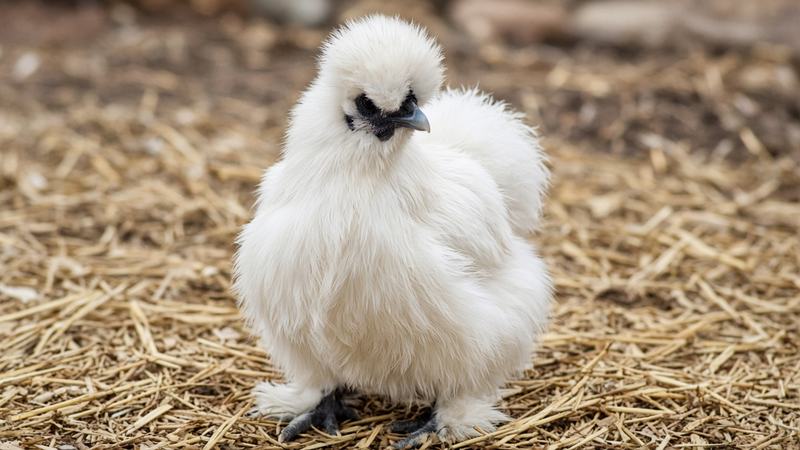
The Silkie looks unlike any other chicken. Its feathers are soft and fluffy, without the firm, smooth vanes of most breeds. It has dark skin, a crest, feathered feet and five toes. Cackle Hatchery notes the white Silkie entered the American Standard of Perfection in 1874.
That coat shapes how you keep them. Cackle Hatchery points out that Silkie feathers do not shed rain the way normal feathers do. A dry coop and a covered run matter more for Silkies than for most hens.
Silkies are small and slow. They are gentle with children. They are easy to pick up. They rarely fly over a fence. For a family flock in a small yard, that is a good list.
The trade-off is eggs. A Silkie lays less than a production hen, and the eggs are small. If eggs are the main goal, pair two Silkies with a few higher-laying hens of a calm breed.
Free-range or confined?
| Setup | Fits a Silkie? | Space per bird | Notes |
|---|---|---|---|
| Covered run with coop | Best fit | 2 sq ft inside, 4 sq ft run | Keeps feathers dry |
| Supervised yard time | Good | same coop figures | Silkies do not fly well |
| All-day free range | Not ideal | — | Cackle Hatchery advises secure housing first |
Silkies do best in a covered, secure run. Cackle Hatchery notes that they cannot fly as well as most chickens, and that a crest can limit what some birds see. Both make open free range a poor match. Supervised time on the lawn works well on dry days.
Space is easy to plan, because Silkies are small. Our coop size calculator uses about 2 sq ft per bantam inside and 4 sq ft in the run. Six Silkies need about 12 sq ft of coop and 24 sq ft of run.
Plan for weather. Wet feathers stay wet on a Silkie. A roofed run keeps the flock out in rain. In a hot climate, add shade and airflow, since Townline Hatchery lists Silkies as not suited to hot climates.
Coop & run setup
Keep the roost low. Oregon State says roosting poles for Silkies should be only 1 ft off the ground, against 2 ft for most breeds. A short ramp to the pop door helps too. Set nest boxes low as well, while keeping them off the floor; our nesting box page has the sizes.
Dry footing is the other priority. Cackle Hatchery recommends a dry, draft-free coop, clean bedding, good airflow and protection from heavy rain and mud. Put the run on well-drained ground and add a solid roof over at least part of it.
The RUNSHED listing says 4 to 6 chickens and is 80 in long. That count is for standard hens. Silkies need about 2 sq ft each, a bantam figure. Measure the house floor and divide by 2. The listing does not give floor area in sq ft, so do not guess a head count from the label.
Check the door height too. Silkies do not jump well. A low pop door with a gentle ramp is easier for them than a tall step.
Feeding
Silkies eat the same feed as other hens, just less of it. Start chicks on a chick starter, move to grower and switch to layer feed when the first egg appears. Townline Hatchery lists an average laying age of 22 to 24 weeks for Silkies.
Use a small feeder and waterer set low enough for a short bird. Nipple or cup waterers help keep beards and crests dry. Our feeding guide covers feed types and amounts.
Watch the small eaters. Silkies can get pushed aside by larger hens at a crowded feeder. A second feeder in a different corner fixes that. Keep oyster shell in its own small dish for laying hens.
Hatching: broody hen or incubator?
| Option | What you need | Notes |
|---|---|---|
| Broody Silkie hen | A quiet nest box, a separate pen, feed and water close by | Townline Hatchery: very broody, will adopt chicks |
| Brooder for bought chicks | Brooder box and a heating plate | Use it when you buy chicks instead of letting a hen sit |
| Brooder after the hatch | Heat plate or lamp, litter, chick feeder | See our brooder setup page |
A broody Silkie hen does most of the work. Townline Hatchery describes Silkies as very broody and known for adopting other chicks. Give her a quiet box in a separate pen, with feed and water within reach. Cackle Hatchery notes that this makes Silkies useful for hatching eggs from breeds that rarely sit.
Bought chicks, or chicks from an incubator, need a brooder. Texas A&M AgriLife Extension gives 21 days for chicken eggs at 99.5 to 100°F. Our brooder gear page and brooder setup cover the box and the weeks after.
The brooder above includes a 10 × 12 in heating plate, by the maker listing. Silkie eggs are small, about 1.5 oz each, by Townline Hatchery. Plan the brooder for the chicks you buy, not for the egg size.
Compared with similar breeds
| Breed | Hen weight | Eggs per year | Egg color | Broodiness |
|---|---|---|---|---|
| Silkie | 2 to 2.5 lb | about 100 to 120 | Cream or tinted | Very broody |
| Cochin (large) | 8.5 lb | up to 140 | Brown | Setters |
| Plymouth Rock | 7.5 lb | around 200 | Brown | Broody at times |
If you like the calm temper but want bigger eggs, a large Cochin is the closest match. The Livestock Conservancy lists it as a setter, with hens around 8.5 lb. For more eggs, a Plymouth Rock lays around 200 large brown eggs a year by the Conservancy figure. Black, blue and lavender are color varieties of the same small bird.
Pros and cons
Pros. Hens weigh 2 to 2.5 lb, so three need about 6 sq ft of floor at 2 sq ft each. They lay about 100 to 120 cream eggs a year. Townline Hatchery calls them very broody, so a hen can sit a clutch.
Cons. 100 to 120 eggs is well under a 200-egg layer. The feathers do not shed rain the way firm feathers do, so you need a covered run. Townline lists them as not suited to hot climates.
Where to get chicks
Silkies are sold as day-old chicks by most mail-order hatcheries and many farm stores in spring. Cackle Hatchery ships Silkies from February through August. Ask whether chicks are sexed; many hatcheries sell Silkies unsexed, so plan for a rooster or two.
Buy at least three. Chickens are social, and a trio settles faster than a pair. If you add Silkies to an existing flock, keep them in a pen beside the others for a week or two first. Then open the gate on a calm morning and stay close by.
Common Questions
How many eggs does a Silkie lay?
About 100 to 120 small cream or tinted eggs a year, per Townline Hatchery. A hen that goes broody stops laying while she sits.
Are Silkies good for beginners?
Yes. Townline Hatchery describes them as very tame and calm. They need a dry, covered run and a low roost, but little else beyond standard care.
How much space do Silkies need?
About 2 sq ft each inside and 4 sq ft in the run, our bantam figures. Three Silkies fit a 6 to 7 sq ft kit coop.
Can Silkies live with other chickens?
Yes, with calm breeds of similar size. Their poor flight and crest make them slower to escape, so avoid mixing them with pushy large hens.
Why can't Silkies get wet?
Cackle Hatchery notes that Silkie feathers do not shed rain the way normal feathers do. Keep a roof on the run and dry bedding in the coop. That is a feather-structure point, and the fix is a dry setup.
Do Silkies lay eggs?
Yes. Townline Hatchery lists about 100 to 120 small cream or tinted eggs a year, about 1.5 oz each. A hen that sits stops laying while she is broody. See how many eggs a day for the one-egg limit.
Read next
Sources
- Townline Hatchery, White Silkie Bantam breed facts: townlinehatchery.com (hen 2 to 2.5 lb, rooster 2.5 to 3 lb; 100 to 120 eggs a year; cream, tinted, small 1.5 oz; laying age 22 to 24 weeks; very tame; cold hardy, not for hot climates; very broody; walnut comb)
- Cackle Hatchery, White Silkie Bantam breed facts: cacklehatchery.com (APA Feather Legged Bantam, recognized 1874; soft feathers; poor flight; dry coop and covered run; ships February to August)
- Oregon State University Extension, EC 1644 Backyard chicken coop design (2014, reviewed 2023): extension.oregonstate.edu (Silkie roosts 1 ft off the ground)
- The Livestock Conservancy, Heritage Chicken Breed Comparison Chart (2026): livestockconservancy.org (Cochin: hen 8.5 lb, up to 140 eggs, setters)
- The Livestock Conservancy, Plymouth Rock chicken breed facts: livestockconservancy.org (Plymouth Rock: hen 7.5 lb, around 200 eggs)
- Texas A&M AgriLife Extension, POSC-PU-018 Incubating and Hatching Eggs (2022): agrilife.org (21 days; 99.5 to 100°F)
- RUNSHED 80 in coop with run, label says 4 to 6 chickens: maker listing on Amazon, ASIN B0H2DW68D8, title read 2026-10-23
- Tetuga brooder heating plate 10 × 12 in: maker listing on Amazon, ASIN B0BYYXY3ML, title read 2026-10-23
How we pick and check numbers: How we research.