Best Egg Laying Chickens: Eggs Per Year by Breed
Coopgauge is reader-supported. When you buy through links on this page, we may earn a commission.
Leghorns lay the most, about 250 to 300 white eggs a year. Australorps lay about 250 brown eggs, and Easter Eggers 200 to 280 colored eggs. Plan 4 sq ft of coop per hen and 1 nest box per 4 hens.
- Most eggs
- Leghorn, 250 to 300 a year
- Most brown eggs
- Australorp, about 250
- Colored eggs
- Easter Egger, 200 to 280
- Typical dual-purpose
- about 200
- Per hen per week, peak
- about 6 (Minnesota Extension)
- Space
- 4 sq ft inside, 1 nest box per 4 hens
Breed figures: The Livestock Conservancy chart and Cackle Hatchery. Weekly figure: Minnesota Extension. Space: our calculator; nest boxes: Oregon State.
Eggs per year by breed
| Breed | Eggs per year | Egg color | Hen weight | Broody | Climate | Source |
|---|---|---|---|---|---|---|
| Leghorn | 250 to 300 | White | 4.5 lb | Non-setter | Best in hot to moderate climates | The Livestock Conservancy |
| Australorp | about 250 | Brown | 6.5 lb | Setter | Cold and heat | The Livestock Conservancy |
| Easter Egger | 200 to 280 | Blue, green, pink | 4 to 5.5 lb | Low | Cold and heat | Cackle Hatchery |
| Olive Egger | 180 to 220 | Olive green | 4.5 to 5.5 lb | Rarely | Cold and heat | Townline Hatchery |
| Orpington | 150 to 280 | Light brown | 8 lb | Setter | Cold hardy | Cackle Hatchery; Oklahoma State |
| Plymouth Rock | about 200 | Brown | 7.5 lb | At times | Cold hardy | The Livestock Conservancy |
| Sussex | about 200 | Tan to brown | 7 lb | Setter | Hot and cold | The Livestock Conservancy |
| Marans | 180 to 200 | Dark brown | 6.5 to 7 lb | By line | Winter hardy | Cackle Hatchery |
| Delaware | 150 to 200 | Brown | 6.5 lb | Setter | Hot and cold | The Livestock Conservancy |
Six hens need 2 nest boxes at 1 box per 4 hens, by Oregon State. The box below is one large compartment, 14.3 × 15.7 in, which is roomier than the 12 in standard. Check the 14.3 in width on the listing before you order a box.
The Livestock Conservancy says the Leghorn produces more eggs with less food than any other breed. It is a light, very active bird that lays white eggs and rarely goes broody. It does best in hot to moderate climates.
For brown eggs, the Australorp leads, at about 250 a year by the Conservancy chart. It is active yet gentle and does well in both cold and heat. The Conservancy calls it a favorite for pastured egg production.
Easter Eggers and Orpingtons have wide ranges, 200 to 280 and 150 to 280 eggs a year by Cackle Hatchery. A good line of either can match the Australorp. The other breeds in the table, such as the Plymouth Rock, Sussex and Delaware, land around 150 to 200, and they are calm, sturdy birds.
Why choose a breed that lays less? Heavier, calmer birds suit families with children and cold winters. Many are setters, so they can hatch a few chicks in spring. The Conservancy lists the Sussex as a good ranger and a docile, curious bird.
The Delaware was bred to grow quickly, and it lays well too. Breeds like these give a steady supply of eggs and a quiet flock. For most backyard families, 200 eggs a year from each hen is plenty.
Heritage breeds also help keep old lines alive. The Livestock Conservancy tracks the status of each breed on its chart. Some, such as the Australorp and Sussex, are listed as recovering, and backyard flocks are part of that story.
Flock size for your egg needs
| Eggs eaten a week | Top layers (6 a week) | Dual-purpose (4 a week) |
|---|---|---|
| 6 | 1–2 | 2 |
| 12 | 2 | 3 |
| 18 | 3 | 5 |
| 24 | 4 | 6 |
| 36 | 6 | 9 |
Minnesota Extension says a good hen lays roughly six eggs a week. A breed that lays 200 a year averages about four a week over the year. Use the left column for Leghorns and Australorps and the right for most dual-purpose breeds.
Plan for the slow months too. Hens lay less in fall, and short winter days slow them too. One extra hen covers most of the gap. Our eggs per day page explains why a hen lays at most one egg a day.
Space and nest boxes
Every breed on the list fits the same coop math. We plan 4 sq ft of floor per standard hen and 5 sq ft for large breeds such as Orpingtons. Oregon State suggests 1 nest box per 4 hens, 12 in on each side. Six hens need 2 boxes. Roost length is on the roost bar page: 8 in per standard hen.
Penn State says to place nests in a dim, quiet spot, off the floor and away from roosts. Keep 2 in of clean shavings in each box. Clean, private boxes keep hens laying where you can find the eggs.
Picking for your yard
Match the breed to your climate and temper as well as egg count. Leghorns are very active and do best in hot to moderate climates. Australorps are gentle, and Plymouth Rocks and Orpingtons are calm, cold-hardy birds. Easter Eggers do well almost anywhere.
Think about broodiness. Setters such as Australorps, Orpingtons and Sussex sometimes stop laying to sit on eggs. Non-setters such as Leghorns keep laying. If you want steady eggs and no chicks, lean toward non-setters.
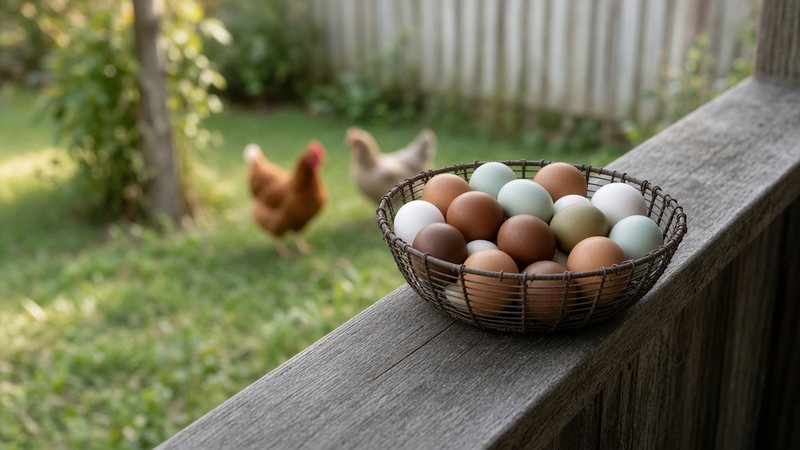
A mixed flock is common and fun. Two Australorps, two Easter Eggers and a Leghorn give a carton of brown, blue and white eggs. Pick breeds of similar size so they share the coop and feeder easily.
Start small if this is your first flock. Three or four hens of one or two breeds are easy to learn on. Add a new breed the next spring, once the routine feels easy. Buy chicks from a hatchery that lists its egg estimates, and compare them with the ranges here before you order.
Egg size and color
Egg color comes from the breed, not the feed. Ohio State Extension notes that hens with red earlobes usually lay brown eggs, and hens with white earlobes usually lay white eggs. Easter Eggers break the pattern with blue and green shells.
Egg size follows body size in most breeds. The Livestock Conservancy lists Australorp eggs as large and Leghorn eggs as medium to large.
Collect eggs often and keep them cool. Gather twice a day in hot weather. A clean nest means less washing in the kitchen. It also makes a nicer carton to share. Neighbors tend to like a gift of eggs. A few dozen buys a lot of goodwill for a noisy morning in the coop.
Keeping layers laying
Feed a complete layer feed from the first egg, with oyster shell in a separate dish. Keep fresh water in reach all day. Collect eggs twice a day, as Minnesota Extension suggests. Wisconsin Extension says hens need 14 to 16 hours of light to lay through the year.
Laying peaks in the first two years and falls after that, by Minnesota Extension. Wisconsin Extension suggests adding a few young hens every 2 to 3 years. That keeps the basket full while older hens stay on as part of the flock.
Common Questions
What chicken lays the most eggs?
On our chart, the Leghorn, at about 250 to 300 eggs a year by The Livestock Conservancy chart. Lines differ, so read the source range, not a single claim.
Can a hen lay 364 eggs a year?
We do not find a public breed record that supports 364 eggs a year. The highest range on this page is the Leghorn, 250 to 300, from The Livestock Conservancy chart.
What is the best brown egg layer?
The Australorp, at about 250 brown eggs a year by the Conservancy chart.
Which chickens lay colored eggs?
Easter Eggers lay blue, green or pink eggs, about 200 to 280 a year by Cackle Hatchery.
How many hens do I need for a dozen eggs a week?
Two top layers or three dual-purpose hens in their peak years.
Read next
- DataHow many eggs a day
- DataEgg color chart
- HubChicken breeds
- BreedEaster Egger chicken
- BreedOlive Egger chicken
- DataNesting boxes for chickens
Sources
- The Livestock Conservancy, Heritage Chicken Breed Comparison Chart (2026): livestockconservancy.org (Australorp and Sussex status recovering; Sussex good ranger, docile, curious; Delaware fast growing; Australorp eggs large, Leghorn medium to large; Leghorn 250 to 300, white, hen 4.5 lb, non-setter, hot to moderate, more eggs with less food; Australorp about 250, brown, hen 6.5 lb, setter, cold and heat, pastured egg favorite; Sussex about 200, hen 7 lb, setter; Delaware 150 to 200, hen 6.5 lb, setter)
- The Livestock Conservancy, Plymouth Rock chicken breed facts: livestockconservancy.org (Plymouth Rock around 200; hen 7.5 lb)
- Townline Hatchery, Olive Egger breed facts: townlinehatchery.com (180 to 220 eggs; hen 4.5 to 5.5 lb; rarely broody)
- Cackle Hatchery, Easter Egger breed facts: cacklehatchery.com (Easter Egger 200 to 280)
- Cackle Hatchery, Buff Orpington breed facts: cacklehatchery.com (Orpington 150 to 280)
- Oklahoma State University, Breeds of Livestock: Orpington Chickens (APA standard weights): breeds.okstate.edu (Orpington hen 8 lb)
- Cackle Hatchery, French Black Copper Marans breed facts: cacklehatchery.com (Marans 180 to 200)
- University of Minnesota Extension, Raising chickens for eggs (reviewed 2025): extension.umn.edu (roughly six eggs a week; peak first two years; pick up eggs twice a day)
- University of Wisconsin–Madison Extension, Life Cycle of a Laying Hen: livestock.extension.wisc.edu (14 to 16 hours of light; add pullets every 2 to 3 years)
- Oregon State University Extension, EC 1644 Backyard chicken coop design (2014, reviewed 2023): extension.oregonstate.edu (1 nest box per 4 birds; 12 × 12 × 12 in)
- Ohio State University Extension, VME-0021 The Making of an Egg (2022): ohioline.osu.edu (red earlobe usually brown eggs, white earlobe usually white)
- Penn State Extension, Small Scale Poultry Housing (updated 2026): extension.psu.edu (nests dim, off floor, away from roosts; 2 in shavings)
- Nest box size: maker listing on Amazon, ASIN B0DG2K2Q1B, read 2026-10-12
How we pick and check numbers: How we research.