Wyandotte Chicken: Brown Eggs, a Rose Comb and What 6.5 Pound Hens Need
Coopgauge is reader-supported. When you buy through links on this page, we may earn a commission.
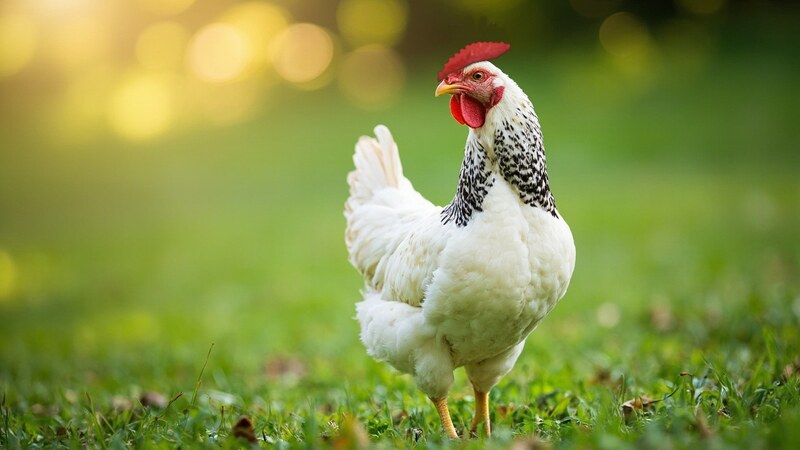
A Wyandotte chicken hen weighs 6.5 lb and lays 180 to 260 brown eggs a year. The rose comb lies flat on the head. The laced pattern comes in nine APA colors. In 1883 the standard admitted only Silver Laced.
- Size class
- Standard, with a bantam line
- Weight range
- Hen 6.5 lb; rooster 8.5 lb (market weight 6.5 to 8.5 lbs)
- Eggs per year (range)
- 180 to 260; about 200 on one breed card
- Egg color
- Brown, light to brown
- Comb type
- Rose, lying flat on the head
- Feather colors
- Nine in the APA large class, ten in the bantam class
- Cold & heat tolerance
- Cold hardy
- Temperament
- Calm and docile; can be assertive in a mixed flock
- Broodiness
- Setter; sometimes broods
- Space per bird
- 4 sq ft inside (standard breed)
Weight, egg color, comb, temperament, broodiness and flight: The Livestock Conservancy. Eggs per year: Cackle Hatchery breed spotlight and Townline Hatchery (180 to 260); about 200 on the Cackle Blue Laced Red card. Egg size: Large (Livestock Conservancy); Medium (Cackle breed card). Space: our calculator.
The Wyandotte was built in the United States in the 1870s, and Wikipedia names four breeders behind it: H. M. Doubleday, John Ray, L. Whittaker and Fred Houdlette.
The first name was American Sebrights. The Livestock Conservancy keeps that record, and the name changed when the bird joined the APA standard in 1883.
The breed took its name from the tribes it was developed among. Cackle Hatchery points to the Huron peoples, known as Wendat or Wyandot.
The Livestock Conservancy puts those tribes in upstate New York and Ontario. Dark Brahma and Spangled Hamburg stock went into the breed.
| Variety | Admitted |
|---|---|
| Silver Laced | 1883 |
| Golden Laced | 1888 |
| White | 1888 |
| Black | 1893 |
| Buff | 1893 |
| Partridge | 1893 |
| Silver Penciled | 1902 |
| Columbian | 1905 |
| Blue | 1977 |
The bantam class came later. The APA admitted seven bantam colors in 1933: Black, Buff, Columbian, Partridge, Silver Laced, Silver Penciled and White.
Three more came after that. Golden Laced was admitted in 1960, Buff Columbian in 1965 and Blue in 1977.
That makes ten in the bantam class: the nine colors of the large class, plus Buff Columbian.
One color sits outside the standard. The APA does not recognize Blue Laced Red, and the Cackle breed card says so.
Ask for a standard color. That is the one you can enter in a show.
Now the comb. Look at the head first. The Wyandotte is the only breed whose rose comb has no spike. Cackle Hatchery describes it lying close to the head.
The Livestock Conservancy calls that comb fairly flat, with small rounded points. The points are smaller on the hen.
A silver laced hen shows white feathers with black edging, and a golden laced hen shows gold feathers with black edging. That pattern is lacing.
Rose comb is the dominant gene. Single comb is recessive. Two rose comb birds that each carry one recessive gene look the same as a pure rose comb bird.
Pair two of them and some chicks come out with single combs. Cackle Hatchery explains that mechanism. It is why a laced bird sometimes turns up with a single comb.
Free-range or confined?
A Wyandotte works in a coop with a run, on wheels, or free range by day. The Livestock Conservancy calls it cold-hardy.
That same page says the breed is not a good flyer. The Cackle card rates the bird docile.
Our space rule for this bird is the standard one, not the large-breed one. A 6.5 lb hen sits a class below an 8 lb Orpington.
So it takes 4 sq ft of floor space and not 5 sq ft like the Orpington.
| Setup | Fits a Wyandotte? | Space per bird | Notes |
|---|---|---|---|
| Coop with a run | Good | 4 sq ft inside, 8 sq ft run | Loose feathering and a flat comb suit cold weather |
| Mobile coop on wheels | Good | same figures | Wheels let you move the run to fresh grass |
| Free range by day | Good | 3 sq ft inside | Oregon State gives 3 sq ft with outdoor access |
| No outdoor access | Not our default | 8 to 10 sq ft inside | Oregon State figure for a flock with no run |
Our assumptions for both tables are simple. Give 4 sq ft of coop floor per standard hen. Give 8 sq ft of run.
Give 8 in of roost bar each. Give 1 nest box per 4 hens. The 3 sq ft row applies when the flock has outdoor access all day.
| Hens | Coop floor | Run | Roost bar | Nest boxes |
|---|---|---|---|---|
| 4 | 16 sq ft | 32 sq ft | 32 in | 1 |
| 6 | 24 sq ft | 48 sq ft | 48 in | 2 |
| 8 | 32 sq ft | 64 sq ft | 64 in | 2 |
Six Wyandotte hens need a 4 × 6 ft house and a 6 × 8 ft run. Measure the floor of any coop you are considering.
Divide it by 4. That gives you the bird count the floor holds, and it is not always the count on the box.
Coop & run setup
Give each Wyandotte 8 in of roost bar. That length is our own figure, the one our calculator uses.
Oregon State allows 5 to 10 in of pole per bird, so our 8 in sits inside that range.
Set the bar 18 to 24 in off the floor, and never go above 4 ft. Penn State gives the height and the limit.
Our roost bar page has the heights, the spacing and the length of bar per hen.
Put in 1 nest box per 4 hens. Keep each box about 12 × 12 × 12 in. Oregon State gives the box size. It gives one box per four birds.
Penn State wants at least 4 ft between the boxes and the roost. That keeps hens from sleeping in them. Box sizes are on our nesting box page.
The comb lies flat against the head. It presents less surface to cold air than an upright single comb does, and that is the point of the shape.
The loose feathering adds insulation on top of that, and Cackle Hatchery credits both traits for the breed's cold tolerance.
Keep the vent high on the wall, above head height, so moving air never blows along the roost. Equipment for the cold months is on our winter coop page.
The Livestock Conservancy says this breed is not a good flyer. That means ordinary poultry netting is enough.
You can skip the extra top net you would add over a run for a flighty bird.
The label says 4 to 8 chickens. The house floor is 8.84 sq ft. At 4 sq ft per standard hen, that is 2 hens.
Those same 2 hens need 16 sq ft of run, and the listing gives 17.69 sq ft. The run is not extra room on top of the house floor.
The house floor is what sets the limit here. For 4 hens you want 16 sq ft of floor and 32 sq ft of run.
The house in the box is a good mobile setup, and the bird count on the carton does not describe the floor.
Check the 8.84 sq ft house floor on the listing against the 4 sq ft per hen figure above. Then measure your own floor the same way.
Feeding
A Wyandotte starts on starter feed. It moves to grower, then goes onto layer feed at the first egg.
University of Maine allows that switch up to 2 weeks before laying starts. This breed matures at about 22 to 24 weeks, by Townline Hatchery.
Plan the feed change before that age. Our feeding guide has the step by step.
Give a layer feed with 14 to 16% protein for a dual-purpose hen. That is the University of Maine figure.
Keep grit and oyster shell in their own dishes, free choice, and keep scratch to a handful, the amount the flock clears in 20 to 30 minutes.
Amounts scale with body weight. Minnesota Extension puts a 6 lb hen at 3 lb of feed a week.
Scale that to 6.5 lb and you get about 3.25 lb of feed a week for that one hen.
So six Wyandotte hens eat roughly 19 to 20 lb of feed a week between them.
Keep water within reach all day. Check the drinker when the weather turns hot. Refill it before you leave the yard.
Hatching: broody hen or incubator?
Three sources say this breed will sit. The Cackle breed card lists broodiness as Setter.
The Cackle breed spotlight says the hens sometimes brood. It calls them terrific mothers when they do. The Livestock Conservancy says the hens are good mothers.
So you have two routes. Let a hen sit, or run an incubator. You need a nest box either way.
A sitting hen stops laying while she is on the nest, so the flock's egg count drops. That cuts the supply for the whole stretch of the sit.
Give her a low, quiet corner of the house. You need enough nest boxes that the other hens keep laying.
The incubator route has numbers. Texas A&M gives a 21-day cycle at 99.5 to 100°F, with 55 to 60% humidity and 5 turns a day.
Our hatching page walks the whole cycle. The incubator page compares machines by egg count.
Work out the batch size from the hens you have. A Wyandotte lays 180 to 260 eggs a year. That is one egg every 1.4 to 2 days.
Over a 21-day cycle, that is 10 to 15 eggs from one hen. Plan the machine around that number.
The machine in the box takes 16 eggs and turns them every 90 minutes. That holds one hen's output in a 21-day cycle, with a position or two over.
Check the 16 egg positions on the listing against the 10 to 15 eggs one hen gives you in a cycle.
Its listing says it shows no humidity value, so you read that from your own meter. The water goes in through an external bottle and a base that adds it for you.
Bottles are not included with the machine. That is one more thing to order.
An alarm sounds if the temperature drifts, and the range runs 68 to 104°F.
Size on the listing is 12.05 × 11.22 × 7.44 in. Check the shelf space before you order.
The power is 110 V, and there is a 12 V clamp lead as well. That second lead is what you want for a power cut.
The chicks are out. The next job is heat. Our brooder setup page has the week by week temperature table and the floor space each chick needs.
Compared with similar breeds
The Wyandotte sits between the light breeds and the heavy ones. It is a dual-purpose bird with a rose comb and a laced feather pattern.
It is lighter than an Orpington, and the table below puts four neighbours beside it. Read the weight column first.
| Breed | Hen | Rooster | Eggs a year | Egg color | Comb | Broodiness | Sq ft each | Standard breed |
|---|---|---|---|---|---|---|---|---|
| Wyandotte | 6.5 lb | 8.5 lb | 180 to 260 | Brown | Rose | Setter | 4 | Yes, since 1883 |
| Orpington | 8 lb | 10 lb | 150 to 280 | Light brown | Single (rose in some countries) | Setter | 5 | Yes, since 1902 |
| Brahma | 9.5 lb | 12 lb | 150 to 200 | Brown | Pea | Setter | 5 | Yes |
| Barred Rock | 6 to 7.5 lb | 8 to 9.5 lb | About 200 | Brown | Single | Setter | 4 | Yes |
| Easter Egger | 4 to 5.5 lb | 5 to 6.5 lb | 200 to 280 | Blue, green, pink | Small comb | Low | 4 | No, it is a cross |
Three differences are worth naming. The Orpington is heavier at 8 lb, and it needs 5 sq ft each.
The Easter Egger is not a breed at all but a cross. Its egg color varies from hen to hen.
The third difference is the comb. The Wyandotte has a rose comb with no spike on it, and the loose feathering keeps the cold out.
Look for the comb when you sort a pen. Egg counts sit close together across these five birds.
The Wyandotte range of 180 to 260 eggs a year overlaps the Orpington and the Easter Egger. The hatchery line decides more than the breed name does.
Where to get chicks
Mail-order hatcheries sell by color. Townline Hatchery's Silver Laced page is an order form, with pullet, cockerel and straight run options.
The same page sets the Silver Laced against the Golden Laced. Cackle Hatchery runs breed pages for Blue Laced Red, Splash Laced Red and Black Laced Red.
That color decides which hatchery line you are buying, not the size class of the bird.
Check two things before you order. The comb should be rose, lying flat on the head with no spike on it.
The feathering should be laced. Silver birds show white feathers with black edging. Golden birds show gold feathers with black edging.
Silver Laced is the base color. The Livestock Conservancy and Cackle Hatchery both name it the original.
Townline Hatchery says every other color came from it. Start with silver or gold if you want the pattern the standard describes.
You do not need a rooster for eggs. Townline Hatchery gives one rooster for every 6 to 10 hens if you want fertile eggs.
The Cackle card gives a 1 to 9 ratio. A yard that keeps no roosters changes nothing else here.
Before the birds come, measure the coop. Four Wyandotte hens need 16 sq ft of floor space and 32 sq ft of run.
Buy the house first, then the birds. The floor you measure is the number that counts.
Common Questions
How many eggs does a Wyandotte lay a year?
A hen lays 180 to 260 brown eggs a year, by the Cackle Hatchery breed spotlight and Townline Hatchery. One Cackle breed card puts the figure at about 200 for the Blue Laced Red variety. The spread comes from the hatchery line, so ask which line you are buying.
What color are Wyandotte eggs, and how big?
The shells are brown. The Livestock Conservancy lists light to brown eggs at Large size. The Cackle Blue Laced Red card lists the same brown shell at Medium. The brown group is on our egg color chart, and a yearly count of 180 to 260 works out to about 3.5 to 5 eggs a week.
How much does a Wyandotte hen weigh?
A hen weighs about 6.5 lb and a rooster 8.5 lb, by the Cackle Hatchery breed spotlight. The Livestock Conservancy gives a market weight of 6.5 to 8.5 lbs. Wikipedia gives a wider band of 6 to 7 lb for a hen and 8 to 9 lb for a rooster.
Do Wyandotte hens go broody?
Sometimes. The Cackle breed card lists broodiness as Setter, and the Cackle breed spotlight says the hens sometimes brood and make terrific mothers when they do. The Livestock Conservancy calls them good mothers. A sitting hen stops laying while she sits.
Are Wyandotte chickens good in cold weather?
Yes. The Livestock Conservancy calls the breed cold-hardy, and Cackle Hatchery credits the loose feathering and the rose comb that lies flat against the head. Keep the vent high, keep the roost 18 to 24 in off the floor, and never above 4 ft.
How do you tell a real Wyandotte from a single comb bird?
Look at the comb. The Wyandotte is the only breed with a rose comb that has no spike, and it lies close to the head. Rose comb is dominant and single comb is recessive, so two rose comb birds can throw single comb chicks. Cackle Hatchery explains how that works.
Read next
- HubChicken breeds
- BreedOrpington chicken
- ListBest egg laying chickens
- CalculatorCoop size calculator
- DataNesting boxes
- GuideEgg incubators
Sources
- The Livestock Conservancy, Wyandotte Chicken: livestockconservancy.org (Egg Color Brown; Egg Size Large; Market Weight 6.5 to 8.5 lbs; Temperament Calm; Status Graduated 2016; named for a Native American tribe of upstate New York and Ontario; first called American Sebrights, renamed when admitted to the APA standard in 1883; Silver Laced the original color; thought to come from Dark Brahma and Spangled Hamburg; rose comb fairly flat with small rounded points, smaller on the hen; face, wattles and ear lobes bright red; cock tail carried at 40 degrees; friendly, calm and cold-hardy; not good flyers; hens good mothers and good layers; eggs light to brown; dual purpose; hen about 6.5 lb, cock 8.5 lb)
- Cackle Hatchery, Wyandotte Chickens in the Heritage Breed Spotlight (Gail Damerow, 2024-03-29): cacklehatchery.com (rooster 8.5 lb, hen 6.5 lb; 180 to 260 large brown eggs a year; sometimes broods and is a terrific mother; loose feathering and rose comb for cold; the only breed with a rose comb that lacks a spike, lying close to the head; sometimes throws single comb chicks, rose dominant to single; large and bantam; silver laced the original color, admitted in 1883; bantams admitted 1933; short tail, short back, loose feathering; name from the Huron peoples known as Wendat or Wyandot)
- Cackle Hatchery, Wyandotte laced color pages: Splash Laced Red and Black Laced Red breed pages, next to the Blue Laced Red card above
- Cackle Hatchery, Blue Laced Red Wyandotte breed card: cacklehatchery.com (Egg Shell Color Brown; Eggs per Year about 200; Egg Size Medium; Broodiness Setter; Hen Weight about 6.5 lbs; Rooster Weight about 8.5 lbs; Mating Ratio 1 to 9; Docile; Cold Hardy; the APA does not recognize Blue Laced Red in the Standard of Perfection; production type, not show type)
- Townline Hatchery, Silver Laced Wyandotte: townlinehatchery.com (about 180 to 260 brown eggs a year; matures at 22 to 24 weeks and starts laying soon after; top pick for cold hardiness; calm, does well free range or confined, can be assertive in a mixed flock; Silver Laced the base for all other colors; white feathers edged in black, golden feathers edged in black; no rooster needed for eggs, one rooster for every 6 to 10 hens for fertile eggs; Egg Color Brown; the Silver Laced order form lists pullets, cockerels and straight run, and the page sets Silver Laced against Golden Laced)
- Wikipedia, Wyandotte chicken: en.wikipedia.org (developed in the 1870s by H. M. Doubleday, John Ray, L. Whittaker and Fred Houdlette; named for the indigenous Wyandot people; rooster 8 to 9 lb, hen 6 to 7 lb; yellow skin, brown eggs, rose comb; broad back, deep full rounded breast, clean-legged; nine APA varieties with their years; bantams the same nine colors plus buff Columbian; listed as recovering in 2015 and removed from the priority list in 2016)
- American Poultry Association, Recognized Breeds and Varieties (September 2012, archived copy): web.archive.org (large class, American: Wyandotte Black 1893, Blue 1977, Buff 1893, Columbian 1905, Golden Laced 1888, Partridge 1893, Silver Laced 1883, Silver Penciled 1902, White 1888; bantam class: Black 1933, Blue 1977, Buff 1933, Buff Columbian 1965, Columbian 1933, Golden Laced 1960, Partridge 1933, Silver Laced 1933, Silver Penciled 1933, White 1933; Comb Rose; Legs Clean Legged; Class American)
- Oregon State University Extension, EC 1644 Backyard chicken coop design (2014, reviewed 2023): extension.oregonstate.edu (3 sq ft per bird with outdoor access, 8 to 10 sq ft without; 5 to 10 in of roost per bird; 1 nest box per 4 birds; box 12 × 12 × 12 in)
- Penn State Extension, Small Scale Poultry Housing (updated 2026): extension.psu.edu (roost 18 to 24 in high, never over 4 ft; nest boxes at least 4 ft from the roost; 8 sq ft of run per laying hen)
- University of Minnesota Extension, Raising chickens for eggs (reviewed 2025): extension.umn.edu (3 to 5 sq ft of indoor space per bird; 3 lb of feed a week for a 6 lb hen)
- University of Maine Cooperative Extension, Bulletin #2222 Nutrition for Backyard Chicken Flocks in Maine: extension.umaine.edu (14 to 16% protein for dual-purpose layers; switch to layer feed up to 2 weeks before laying; scratch cleaned up in 20 to 30 minutes)
- Texas A&M AgriLife Extension, POSC-PU-018 Incubating and Hatching Eggs (2022): agrilife.org (21 days at 99.5 to 100°F, 55 to 60% humidity, 5 turns a day)
- Comparison row, Orpington: Cackle Hatchery, Buff Orpington breed facts: cacklehatchery.com (150 to 280 eggs; light brown, large; setter; hen 8 lb); Oklahoma State University, Breeds of Livestock: Orpington Chickens: breeds.okstate.edu (APA standard, cock 10 lb; either a single or a rose comb, depending on the standards of the country)
- Comparison row, Brahma: Cackle Hatchery, Light Brahma: cacklehatchery.com (hen 9.5 lb, rooster 12 lb); Townline Hatchery, Light Brahma: townlinehatchery.com (about 150 to 200 light brown eggs); The Livestock Conservancy, Brahma Chicken: livestockconservancy.org (male 12 lb; brown eggs, medium to large)
- Comparison row, Barred Rock: The Livestock Conservancy, Plymouth Rock chicken breed facts: livestockconservancy.org (hen 7.5 lb, male 9.5 lb; around 200 large brown eggs; broodiness listed among the merits, no broodiness rate given); Cackle Hatchery, Barred Rocks: cacklehatchery.com (APA 1874; Eggs per Year about 200 to 220; Broodiness Setter; Hen Weight about 7.5 lbs; Rooster Weight about 9.5 lbs; a single upright comb); Townline Hatchery, Barred Rock: townlinehatchery.com (female 6 to 7 lb, male 8 to 9.5 lb)
- Comparison row, Easter Egger: Cackle Hatchery, Easter Egger breed facts: cacklehatchery.com (hen 5.5 lb, rooster 6.5 lb; 200 to 280 eggs; green, blue and pink); Tractor Supply, Easter Egger Chicken Guide (PDF): tractorsupply.com (hens about 4 lb, roosters 5 lb)
- Wooden chicken coop with wheels, 8.84 sq ft house and a 17.69 sq ft run, 3 perches, 2 nest boxes, 83.3 × 31.1 in: maker listing on Amazon, ASIN B0H45N2ZWS, read 2026-11-13
- CoInceptus 16-egg incubator, turning every 90 minutes, 68 to 104°F with an alarm, external bottle and auto-add base, 12.05 × 11.22 × 7.44 in, 110 V and 12 V clamp lead: maker listing on Amazon, ASIN B0FW3MFJRC, read 2026-11-10
How we pick and check numbers: How we research.