Cochin Chicken: 8.5 Pound Hens, Brown Eggs and a Low Roost
Coopgauge is reader-supported. When you buy through links on this page, we may earn a commission.
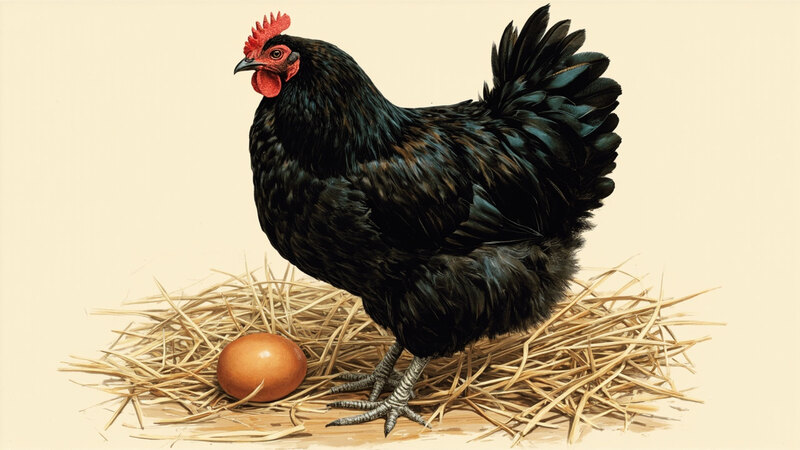
A cochin chicken hen weighs 8.5 lb. The rooster weighs 11 lb. The shell is brown. One count is 150 to 200 eggs a year, only when she is not sitting. Two other counts sit lower. Do not fold them into one band you can shop from. Sitting pulls the high count down. First eggs come at about 8 months.
- Size class
- Large; a bantam line exists
- Weight range
- Hen 8.5 lb, rooster 11 lb (breed page, 2026 chart, large cards)
- Eggs per year (range)
- 150 to 200 if not sitting; up to 140 on the 2026 chart; about 110 to 160 on large cards
- Egg color
- Brown; medium or large, Large, or Medium to Large by source
- Comb type
- Single; small on the hen, medium on the rooster; red earlobes
- Feather colors
- Nine APA colors, Black included
- Cold & heat tolerance
- Fits a cold climate; give shade and water in the heat
- Temperament
- Friendly, docile
- Broodiness
- Setter; one of the strongest sitting breeds
- Space per bird
- 5 sq ft inside (our large band)
150 to 200, comb, colors, temper, broodiness: Conservancy breed page. Up to 140: 2026 chart. 110 to 160: Cackle large cards, read 2026-11-13. Space: our calculator.
Black is a feather color, not a second breed. If the label says Black Cochin, it is naming the plumage. Check large against bantam before you order.
| Color | On the list |
|---|---|
| Buff, Partridge, White | Same breed |
| Black | Same breed, not a separate one |
| Silver Laced, Golden Laced | Same breed |
| Blue, Brown, Barred | Same breed |
The egg count is the number people fold. Keep the three rows apart. The breed page says 150 to 200, and only when she is not sitting. The 2026 chart says Fair, up to 140. The large cards say about 110 to 160, also Fair.
The shell color does not move. All three sources call it brown. Size is the word that shifts, from medium or large to Large to Medium to Large.
Free-range or confined?
A large Cochin does not fly, and the breed page pairs that with a low roost. Plan from the house floor, even if your flock walks out by day.
| Setup | Fits a large Cochin? | Space per bird | Notes |
|---|---|---|---|
| Coop with run | Yes | 5 inside, 10 run | Floor is the plan |
| Free range by day | Yes | 5 inside still | Not the 3 sq ft standard cut |
| Mobile coop | With care | same | Heavy, stays close |
| Cold-climate coop | Yes | same | Shade and water in heat |
Our assumptions: 5 sq ft of floor, 10 sq ft of run, 10 in of roost, 1 box per 4 birds. That is the large band. A standard hen uses 4 sq ft. A bantam uses 2.
| Birds | House floor (sq ft) | Run (sq ft) | Roost (in) | Nest boxes |
|---|---|---|---|---|
| 4 large | 20 | 40 | 40 | 1 |
| 6 large | 30 | 60 | 60 | 2 |
| 8 large | 40 | 80 | 80 | 2 |
| 1 bantam Cochin | 2 | 4 | not the large figure | 1 per 4 |
Six large hens need 30 sq ft. Six standard hens need 24. The gap is the body. A bantam uses 2 sq ft inside and 4 of run, from our bantam page.
One figure does not travel. A standard hen that ranges all day can drop to 3 sq ft inside. An 8.5 lb hen cannot. Keep 5 and 10. The coop size calculator does that sum. Pick Large.
Coop & run setup
Start with the roost. The breed page asks for a low roost because of the weight. Large hatchery cards print the height as Low. That line has no inch height on it.
Length is a different number. Give 10 in of bar per large bird, from our roost bar page. Six hens need 60 in. Set the bar low, then measure the length yourself.
Nest boxes go up a size. A standard box starts at 12 × 12 × 12 in. Penn State says to add space for larger birds. Our nesting box page names that step. Give an 8.5 lb hen room to turn.
The floor has to dry. Feathered feet hold mud. The 2026 chart asks for well-drained ground. Pick litter on the bedding page.
The breed page calls the bird a fit for cold, and asks for shade and water in the heat. Block winter wind and leave a high vent. That plan is on our winter coop page. Shade the summer run. See the run cover page.
The listing says 6 to 8 in the title, and the feature text repeats that count. The floor is 41.2 sq ft. At 5 sq ft for an 8.5 lb hen, that is 8 hens. The run is 28 sq ft, or 2 to 3 birds.
Six of these hens want 30 sq ft of house and 60 sq ft of run. The house has that room. The run is 28 sq ft, short by 32. The chicken coop guide compares houses by floor.
Feeding
Once eggs start, feed a layer ration. Maine puts dual-purpose layer feed at 14 to 16% protein. Our feeding guide uses about 16% and switches at the first egg.
Amount follows weight. Minnesota Extension gives about 3 lb a week for a 6 lb hen. The same rate puts an 8.5 lb hen near 4 lb a week. That is a proportion, not a new trial. Six hens eat about 24 lb a week.
Put grit and oyster shell in their own dishes. Maine recommends oyster shell free choice, whatever the calcium on the bag. You keep the two dishes apart. The split is on our grit page.
Water follows the head count. Size the drinker for the flock you keep. Six hens that share one trough need a second. Sizes are on the waterer page.
Hatching: broody hen or incubator?
The 150 to 200 count holds only when she is not sitting. The breed page says she will sit more than one batch a year. A rooster sometimes sits too. The count you collect depends on whether you let her sit.
Want the eggs? You take them, or you move the sitting hen off the shared boxes. Want chicks? Give her a box she can turn in. An 8.5 lb hen does not fold into a 12 in tray the way a 4 lb hen does.
An incubator is the other path. Set 21 days at 99.5 to 100°F, and 55 to 60% humidity through day 18, per Texas A&M. The table is on our hatching page. Machines are on the incubator page.
After hatch, week 1 is 95°F at chick level, then 5°F less each week. That table is on the brooder setup page.
The box above is rated for 5 standard hens or 9 bantams. The maker calls it low, and lists it for large hens and broody hens. An 8.5 lb sitting hen is the bird that rating has to hold.
The low plastic lodge is 100% recycled plastic, with small vents, a lockable rear door and a reinforced front door.
The 1 box per 4 birds rule still covers the rest. Four hens need one box. Six need two. A sitting hen takes one, which is why the 150 to 200 count falls.
Compared with similar breeds
Feathered feet leave two large breeds here. A Brahma is the other. The split is the head: pea comb and a heavy brow, against a single comb. The Brahma page keeps that line.
| Bird | Hen | Eggs a year | Egg color | Comb | Broodiness | Feet |
|---|---|---|---|---|---|---|
| Cochin, large | 8.5 lb | 150 to 200, not sitting | Brown | Single | Setter | Feathered, 4 toes |
| Cochin Bantam | about 1.6 lb | Fair, small eggs | Brown | not printed here | Setter | Feathered |
| Brahma, Light | 9.5 lb | 150 to 200 | Brown | Pea | Setter | Feathered |
| Silkie | 2 to 2.5 lb | 100 to 120 | Cream | Walnut | Very broody | Feathered, 5 toes, crest |
| Orpington | 8 lb | 150 to 280 | Brown | Single | Broody | Clean |
A Silkie is the mix-up. Both are fluffy, and both have feathered feet. A Silkie has five toes, a crest and a walnut comb. A Cochin has four toes, no crest and a single comb. The breed page adds one mark: only the inner two toes are bare.
An Orpington is the clean-legged match. The hen is 8 lb against 8.5 lb. Both have a single comb, and both sit. Feet are the split. The Orpington page has the brown egg without the feathered shank.
A frizzle Cochin is the same 8.5 lb bird with curled feathers. The frizzle page already has that row. A mini is not this spec. Weight and floor sit on the bantam page.
Where to get chicks
Hatcheries list this bird by color. Black, White and Buff are lines of one breed. A feed store may say Cochin or bantam Cochin. Those two words are the split. Color is not.
Read three lines. The comb is single. The feet are feathered. The size is large, about 8.5 and 11 lb, or bantam. A card that says Black is naming plumage.
The bantam weight does not fold into one number. A card read on 2026-11-13 lists the hen at about 1.6 lb. Our bantam page prints 26 oz from an earlier card. Keep both. Do not average them.
A mini is not the large spec. The gap is weight and floor. Keep 8.5 lb and 5 sq ft for the large hen on this page.
Hens lay without a rooster. A card ratio of 1 rooster to 6 hens is a label line, not a plan you have to follow. You measure the floor before you order.
Common Questions
Are Cochin chickens good egg layers?
They lay. Keep the three counts apart. The breed page says 150 to 200 when she is not sitting. The chart says up to 140. Large cards say about 110 to 160. If you let her sit, the flock comes in under the top row.
What color eggs do Cochin hens lay?
Brown. The breed page says medium or large. The 2026 chart says Large. Large cards say Medium to Large. A cochin chicken egg is a brown egg. Size is the word that moves.
Are Cochin roosters friendly?
The breed page calls the breed friendly and docile. That line covers the rooster too. It also notes that a rooster sometimes sits. That is a temper note, not a claim about children. Read the card for the line you order.
How big is a cochin hen?
A large hen weighs 8.5 lb, and the rooster 11 lb, on the breed page, the chart and the large cards. A bantam hen is another bird. One 2026-11-13 card lists about 1.6 lb. Our bantam page prints 26 oz. Plan 5 sq ft for the large hen.
Is a black Cochin a different breed?
No. Black is one of nine APA colors, next to Buff, White and Partridge. A black cochin chicken is that plumage on a large bird, or on a bantam. Check large against bantam. That is 8.5 lb against about 1.6 lb.
Large or bantam: which floor number?
Large uses 5 sq ft inside and 10 of run. Bantam uses 2 and 4. Six large hens need 30 sq ft, not the 24 on a standard label. Do not use the 3 sq ft all-day figure on an 8.5 lb hen.
Read next
- HubChicken breeds
- BreedBrahma chicken
- BreedBantam chickens
- BreedSilkie chicken
- BreedOrpington chicken
- BreedFrizzle chicken
- CalculatorCoop size calculator
- GuideRoost bar
- GuideNesting boxes
- GuideLayer feed
- GuideHatching eggs
Sources
- Livestock Conservancy, Cochin: livestockconservancy.org. Cock 11 lb, hen 8.5 lb. 150 to 200 brown eggs when not sitting. First eggs about 8 months. Setter. Single comb. Red earlobes. Feathered feet, inner two toes bare. APA 1874. Nine colors, including Black. Low roost. Fits cold. Shade and water in heat. Friendly, docile. Recovering. Read 2026-11-13.
- Livestock Conservancy, 2026 chart: livestockconservancy.org. Male 11 lb, female 8.5 lb. Fair, up to 140. Brown, Large. Docile. Setters. Cold climate. Well-drained ground. Read 2026-11-13.
- Cackle, Black Cochin Standard: cacklehatchery.com. APA 1874. Hen about 8.5 lb, rooster about 11.0 lb. About 110 to 160 eggs, Fair, Medium to Large, brown. Setter. Roost Low. Mating ratio 1:6. Recovering. Read 2026-11-13.
- Cackle, White Cochin Standard: cacklehatchery.com. Same 8.5 and 11 lb, and 110 to 160 eggs. Setter. Low roost. TLC row reads Watch, not Recovering. Read 2026-11-13.
- Cackle, Black Cochin Bantam: cacklehatchery.com. Hen about 1.6 lb. Brown, Small, Fair, Setter. Roost Low. APA 1874. Read 2026-11-13.
- Cackle, Buff Cochin Bantam: cacklehatchery.com. Brown, Fair, Small, Setter. This read did not print 26 oz. Read 2026-11-13.
- Brahma row, as on our Brahma page: Light hen 9.5 lb, pea comb, 150 to 200 brown eggs. That page cites Oklahoma State. The Oklahoma page returned 403 on 2026-11-13, so this row does not link it.
- Townline, White Silkie: townlinehatchery.com. Hen 2 to 2.5 lb. 100 to 120 eggs. Cream. Walnut comb. Very broody. Five toes and a crest.
- Orpington row, Oklahoma State and Cackle: hen 8 lb, 150 to 280 brown eggs, single comb, broody, clean legs.
- Minnesota Extension, eggs page: extension.umn.edu. About 3 lb of feed a week for a 6 lb hen. 3 to 5 sq ft of indoor space per bird.
- Maine Extension #2222: extension.umaine.edu. Layer feed at 14 to 16% protein for dual-purpose hens. Oyster shell free choice.
- Penn State, poultry housing: extension.psu.edu. Increase the nesting space for larger birds. Bantam run on our calculator.
- Oregon State EC 1644: extension.oregonstate.edu. 3 sq ft with outdoor access, standard hens only. One box per 4 birds. Box 12 × 12 × 12 in.
- Texas A&M POSC-PU-018: agrilife.org. 21 days at 99.5 to 100°F. Humidity 55 to 60% through day 18.
- Maine Extension #2219: extension.umaine.edu. 95°F at chick level in week 1, then 5°F less each week.
- Floor math: our calculator, read 2026-11-13. The 4 lb week rate is a proportion of the 6 lb rate.
- Coop listing, ASIN B0GQM5B1QV, read 2026-11-26. House floor 41.2 sq ft, in the title and the feature text. Run 28 sq ft. Size 118.1 × 53.5 × 49.5 in. Title 6 to 8, feature text repeats the count. Six nesting boxes. Four perches in the house, two in the run. 1 unit.
- Broody box, ASIN B0BHT7VGCX, read 2026-11-13. 5 standard hens or 9 bantams. Recycled plastic. Low body. Lockable rear door.
How we pick and check numbers: How we research.