Leghorn Chicken: White Eggs, a Big Single Comb and What 4.5 Pound Hens Need
Coopgauge is reader-supported. When you buy through links on this page, we may earn a commission.
A Leghorn chicken hen weighs 4.5 lb and lays 250 to 300 white eggs a year. That is the number to plan a flock around, and it is not the only one published. The Livestock Conservancy breed page puts the same bird at 150 to 320. Measure your floor before you order either one.
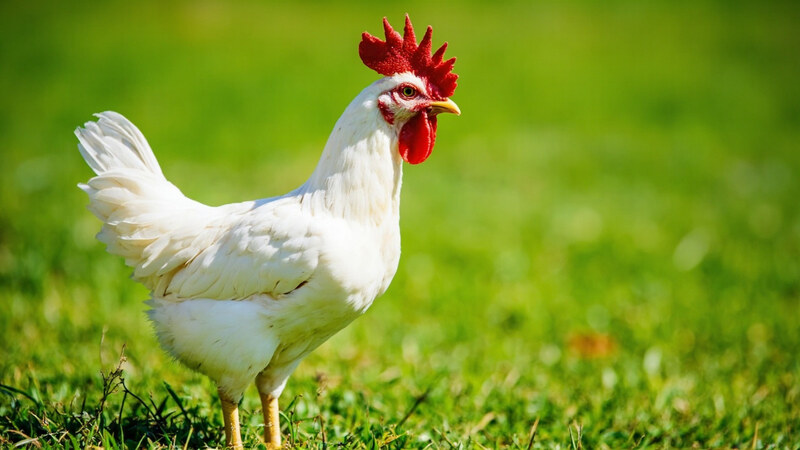
- Size class
- Standard, light breed; a bantam line exists
- Weight range
- Hen 4.5 lb, rooster 6 lb; Italian standard hen 2.0 to 2.3 kg, rooster 2.4 to 2.7 kg; British standard hen 2.5 kg, rooster 3.4 kg
- Eggs per year (range)
- 250 to 300 on the breed chart; 150 to 320 on the breed page; about 220 to 300 on the Cackle breed card; 280 to 320 on the Townline page; 280 on average
- Egg color
- White
- Egg size
- Medium to large on the chart; large to extra-large on the breed page; X-Large on the Cackle card
- Comb type
- Single, tall and red; the US standard also takes rose comb
- Feather colors
- Ten in the APA large single-comb class, six more as rose comb, one more in the bantam class
- Cold & heat tolerance
- Best in hot to moderate climates; the single comb is a large surface for cold air
- Temperament
- Very active, independent, keeps its distance, loud
- Broodiness
- Non-setter
- Space per bird
- 4 sq ft inside, 8 sq ft of run (our calculator)
Weight, comb, colors, temperament, broodiness, flight and climate: The Livestock Conservancy breed page. Eggs per year, egg size and the 1 to 12 mating ratio: Cackle Hatchery breed card. The 280 to 320 range and the 18 to 20 week start: Townline Hatchery. Italian and British standard weights: Wikipedia. Space: our calculator.
The Leghorn comes from the Italian coast, not the English farmyard. The name comes from Livorno, the port the first birds left from.
The Livestock Conservancy dates two export rounds. One was in 1828. Another came in 1830 and 1831. The white birds shipped first were called Italian Fowls and White Spanish.
The name Leghorn dates from 1865. An 1881 Poultry Bulletin called the breed white with disproportionately large combs and as precocious layers.
That comb is still the feature to look for. It is large. It is red. It is upright on both sexes. The rose comb version shows up in the US standard too.
| Comb | Variety | Admitted |
|---|---|---|
| Single | White | 1874 |
| Light Brown | 1874 | |
| Dark Brown | 1874 | |
| Black | 1874 | |
| Buff | 1894 | |
| Silver | 1894 | |
| Red | 1929 | |
| Black-tailed Red | 1929 | |
| Columbian | 1929 | |
| Golden Duckwing | 1981 | |
| Rose | Light Brown | 1883 |
| Dark Brown | 1883 | |
| White | 1886 | |
| Black | 1981 | |
| Buff | 1981 | |
| Silver | 1981 | |
| Bantam | Barred, single comb only | — |
That spread comes from the hatchery line, not from a different bird. Wikipedia counts ten single-comb colors in the large class. Six of them are also accepted with a rose comb. The bantam class adds one barred bird with a single comb.
The white leghorn chicken is the variety Cackle Hatchery lists as APA 1874. White plumage has one practical cost.
Cackle Hatchery points out that white birds stand out at night. So you need a closed house and a latched door after dark.
Adult birds carry white ear lobes, yellow legs and a yellow beak. The Livestock Conservancy describes a narrow breast and an upright stance, like a game bird.
Free-range or confined?
A Leghorn works in a coop with a run. It works on wheels. It also works free range by day. The Livestock Conservancy says confined housing is fine. The house has to be big enough. And there has to be something to do.
That is the catch with this breed. It is a very active bird, and it does not sit still. Space is what keeps a busy flock settled.
For sizing we use the standard rule, not the large-breed rule. A 4.5 lb hen is a standard bird. An 8 lb Orpington is a large one. So the Leghorn takes 4 sq ft of floor and not 5.
| Setup | Fits a Leghorn? | Space per bird | Notes |
|---|---|---|---|
| Coop with a run | Good | 4 sq ft inside, 8 sq ft run | Run needs a top net, this breed flies |
| Mobile coop on wheels | Good | same figures | Wheels let you move the run to fresh grass |
| Free range by day | Good | 3 sq ft inside | Oregon State gives 3 sq ft with outdoor access |
| No outdoor access | Not our default | 8 to 10 sq ft inside | Oregon State figure for a flock with no run |
Our assumptions for both tables are simple. Give 4 sq ft of coop floor per standard hen. Give 8 sq ft of run.
Give 8 in of roost bar each. Give 1 nest box per 4 hens. The 3 sq ft row applies when your flock has outdoor access all day.
| Hens | Coop floor | Run | Roost bar | Nest boxes |
|---|---|---|---|---|
| 4 | 16 sq ft | 32 sq ft | 32 in | 1 |
| 6 | 24 sq ft | 48 sq ft | 48 in | 2 |
| 8 | 32 sq ft | 64 sq ft | 64 in | 2 |
Six Leghorn hens need a 4 × 6 ft house and a 6 × 8 ft run. Measure the floor of any coop you are considering. Then divide it by 4.
That division gives you the bird count. The floor holds it. It is often not the count on the box. The coop size calculator does the same arithmetic with the run, the roost and the boxes.
Coop & run setup
Measure the door opening against the comb, not the body. The 1881 Poultry Bulletin called this breed's combs disproportionately large. The same shape is why the opening matters.
Our automatic door page measures three openings: 8.2 × 9.6 in, 9.45 × 10.91 in and 10.8 × 14.2 in.
A 4.5 lb hen fits the first opening. A rooster with that comb needs the 10.8 × 14.2 in one. Measure your tallest bird before you buy the door.
Give each Leghorn 8 in of roost bar. That is our own figure, the one our calculator uses. Oregon State allows 5 to 10 in of pole per bird, so our 8 in sits inside that range.
Set the bar 18 to 24 in off the floor, and never go above 4 ft. Penn State gives the height and the limit.
Now the boxes. Put in 1 nest box per 4 hens. Keep each box about 12 × 12 × 12 in. Oregon State gives the box size and the count.
Penn State wants at least 4 ft between the boxes and the roost. That keeps hens from sleeping in them.
This breed flies. The Livestock Conservancy says some strains are good flyers and startle easily. Put netting over the run. Keep the fence high enough. A bird should not be able to sit on top of it.
Cold weather is a question of structure here, not of the bird. A tall single comb is a lot of surface facing the air. The rose comb version is the smaller shape.
Block the drafts at the roof edge. Keep 4 to 6 in of bedding on the floor. Leave one vent open.
Keep the roost out of the draft line and the vent above head height. A dry house and deep bedding do more for you than any lamp. Our winter chicken coop page has the setup table.
One last job for the night. Kentucky ID-245 tells you to shut the birds in and latch the doors after dark. White birds stand out after dark, so the latch is the part to check. For a white Leghorn chicken, that night check is the only extra step.
The listing title says 1 to 2 chickens. The maker lists a 6.57 sq ft house and a 10.76 sq ft run.
Divide the house by 4 sq ft and you get 1.64 hens. Divide the run by 8 sq ft and you get 1.35. The run is the tighter of the two, so this floor holds 1 Leghorn.
Check the 6.57 sq ft house on the listing. Compare it with 4 sq ft per 4.5 lb hen. Then measure your own floor the same way.
If you want 4 Leghorns, you need 16 sq ft of floor and 32 sq ft of run. Our coops with a run page has kits sized for that flock.
Feeding
A Leghorn starts on starter feed, then moves to grower, then goes onto layer feed at the first egg. University of Maine allows that switch up to 2 weeks before laying starts.
This is a light breed, so the starter runs higher in protein. University of Maine gives light breeds 20 to 22% protein until 6 weeks. Our chick starter feed page has the same figures.
Give a laying hen a layer feed with 14 to 16% protein. That is the University of Maine figure for egg birds. It applies from the first egg onward.
Plan the feed change around the bird, not the calendar. The first egg sets the date. Townline Hatchery puts maturity at 18 to 20 weeks. The first egg comes at 4.5 to 5 months for the White Leghorn.
Now the amount. This is where our own arithmetic shows up. Minnesota Extension puts a 6 lb hen at 3 lb of feed a week.
Scale that to a 4.5 lb hen and you get about 2.25 lb a week.
So six Leghorn hens eat roughly 13.5 lb of feed a week between them. The Livestock Conservancy calls the breed a small eater. Cackle Hatchery puts the daily amount at about 125 g a bird. Both sit near our scaled number.
Keep grit and oyster shell in their own dishes, free choice. Let each hen take what she needs. Keep scratch to a handful, the amount your flock clears in 20 to 30 minutes.
Water is a bigger number in summer. The Kentucky poultry water table gives 5.55 gallons a day for 100 layer hens at 68 °F. At 89.6 °F it gives 10.57 gallons for 100 birds.
Our count from those two numbers is 0.06 gallon a hen in mild weather and 0.11 gallon in hot weather.
Six hens drink 0.36 to 0.66 gallon a day, our arithmetic again. A 2 gallon waterer lasts about three days when it is hot. Shade the water and change it daily. Our chicken waterer page compares the sizes.
The feeder in the box holds 30 lb behind a locking lid, with 6 feeding ports on the front. Six Leghorn hens eat about 13.5 lb a week. That is two weeks of feed in one fill.
Check the 30 lb capacity on the listing. Compare it with the 13.5 lb a week your six hens use.
Two details matter in the yard. The galvanized body is weatherproof, and the lid closes over the opening. Feed stays dry. Ports keep the birds from throwing feed on the ground, which cuts the waste.
The stand adjusts in height, so one feeder works for pullets and for full-size hens. Our rat-proof feeder page has the other shapes to compare.
Hatching: broody hen or incubator?
Two sources say this breed does not sit. The Cackle Hatchery breed card lists broodiness as non-setter.
The Livestock Conservancy says Leghorn hens are not broody. They are not the best mothers either. So the incubator is the route both sources point to for Leghorn eggs.
The incubator route has numbers. Texas A&M gives a 21-day cycle at 99.5 to 100 °F, with 55 to 60% humidity and 5 turns a day. Day 18 changes the settings. The last three days run 98.5 °F, and the hatch stage calls for 65 to 70% humidity.
Work out the batch size first. Then count the hens you have. A Leghorn lays 250 to 300 eggs a year. That is one egg every 1.2 to 1.5 days. Over a 21-day cycle, that is 14 to 17 eggs from one hen.
Our hatching page walks the whole cycle, and the incubator page compares machines by egg count.
One advantage comes with the non-setting habit. Your flock keeps laying through the weeks you are hatching. The chicks move to the brooder setup page once they are out.
Compared with similar breeds
The Leghorn sits with the light breeds. The table below puts four neighbours beside it. Read the weight column first. One neighbour lays white eggs too, and fewer of them.
| Breed | Hen | Rooster | Eggs a year | Egg color | Egg size | Comb | Broodiness | Flier | Sq ft each |
|---|---|---|---|---|---|---|---|---|---|
| Leghorn | 4.5 lb | 6 lb | 250 to 300 | White | Medium to large | Single, tall | Non-setter | Some strains | 4 |
| Polish | 4.5 lb | 6 lb | 150 to 200 | White | Medium to large | V comb | Non-setter | Yes | 4 |
| Wyandotte | 6.5 lb | 8.5 lb | 180 to 260 | Brown | Large | Rose, flat | Setter | Rarely | 4 |
| Easter Egger | 4 to 5.5 lb | 5 to 6.5 lb | 200 to 280 | Blue, green, pink | — | Small comb | Low | — | 4 |
| Orpington | 8 lb | 10 lb | 150 to 280 | Light brown | Large | Single | Setter | — | 5 |
Three differences are worth naming. The Polish weighs the same as a Leghorn and also lays white eggs. But it lays 50 to 150 fewer eggs a year, and it is the quieter bird.
The Wyandotte and the Orpington are both dual-purpose setters. Both have brown eggs and a heavier body. The Orpington at 8 lb takes 5 sq ft each, not 4.
The Easter Egger is not a breed at all but a cross. Its egg color varies from hen to hen. So in a mixed carton, the white eggs come from the Leghorn.
Where to get chicks
Mail-order hatcheries list the breed by color. A White Leghorn order sits on its own page. A farm feed store sells the same bird. You will find it under the breed name.
Two labels to check on the box. First, that it says Leghorn and not a generic white layer. Second, the comb: the US standard takes both single and rose comb. The Italian standard takes single comb only.
There is a type question as well. The Livestock Conservancy says most Leghorns today are production birds. The smaller flocks that keep the standard body and comb sit with smaller breeders. Cackle Hatchery sells production type only.
Two traits tell you what you have. A big red single comb, and white plumage with white ear lobes and yellow legs. The Livestock Conservancy describes the upright, narrow-breasted shape. The comb is the part you can check in the sales pen.
One more decision before the order. You do not need a rooster for eggs. If you want fertile eggs, the Cackle card gives one rooster for 12 hens. Townline Hatchery gives one for 6 to 10 hens.
Before the birds come, measure the coop. Six Leghorn hens need 24 sq ft of floor and 48 sq ft of run. Buy the house first, then the birds.
Common Questions
How many eggs does a Leghorn chicken lay a year?
A Leghorn hen lays 250 to 300 white eggs a year on the Livestock Conservancy breed chart, which is the figure our other egg pages use. The same organization's breed page gives 150 to 320. Cackle Hatchery's breed card says about 220 to 300, and Townline Hatchery says 280 to 320. Wikipedia quotes 280 a year as the average. The gap between them is the hatchery line you buy, so read the number on the card that comes with your birds.
What color are Leghorn eggs and how big are they?
White, every time. The egg color chart on our site lists Leghorn in the white group. Size varies by source: medium to large on the Livestock Conservancy chart, large to extra-large on its breed page, and X-Large on the Cackle card. Wikipedia puts the shell at 55 g or more. A flock of 6 hens on the 250 to 300 figure works out at about 5 to 6 eggs a week, and our eggs per day page explains why a hen lays at most one egg a day.
How much does a Leghorn hen weigh?
A hen weighs about 4.5 lb and a rooster about 6 lb, by the Livestock Conservancy breed page and the Cackle breed card. The Italian standard gives a hen 2.0 to 2.3 kg and a rooster 2.4 to 2.7 kg. The British standard is heavier, at 2.5 kg for a hen and 3.4 kg for a rooster. A bantam line tops out at 910 g for a hen and 1020 g for a rooster.
Do Leghorn hens go broody?
Not according to the two sources that list it. The Cackle Hatchery breed card gives broodiness as non-setter, and The Livestock Conservancy says Leghorn hens are not broody and are not the best mothers. Plan on an incubator for Leghorn eggs, set at 99.5 to 100 °F for 21 days with 55 to 60% humidity.
Are Leghorns good in hot or cold weather?
They do best in hot to moderate climates, which is how the Livestock Conservancy breed chart scores them, and Cackle Hatchery lists the breed as heat tolerant. For cold weather, work on the house rather than the bird: block the drafts, keep 4 to 6 in of bedding, leave one vent open, and keep the roost out of the draft line. The single comb is a large shape, and the rose comb variety is the smaller one for a cold yard.
Can Leghorn chickens fly?
Some strains can. The Livestock Conservancy says the breed flies and startles easily, and Townline Hatchery calls the bird active and good at flying. Net the top of the run, keep the fence high enough that a bird cannot perch on it, and plan on 8 sq ft of run for every hen.
Read next
- HubChicken breeds
- ListBest egg laying chickens
- DataEgg color chart
- DataHow many eggs per day
- CalculatorCoop size calculator
- DataNesting boxes
- GuideFree range chickens
- FeedChick starter feed
Sources
- The Livestock Conservancy, Leghorn – Non-Industrial Chicken: livestockconservancy.org (Status Recovering; Use Eggs; Egg Color White; Egg Size Large to Extra-Large; Weight Male 6 lbs / Female 4.5 lbs; Temperament Very Active; 150 to 320 large to extra-large white eggs a year; not broody and not the best mothers; some strains fly and startle easily; confined housing works if the space is large enough; cold and heat tolerant, with the rose comb the smaller shape in cold weather; loud, and not suited to city or suburban lots; small appetite; originated in Tuscany, called Livornese after the port of Livorno, exported in 1828 and 1830 to 1831 as Italian Fowls and White Spanish, named Leghorn from 1865; an 1881 Poultry Bulletin called the breed white with disproportionately large combs; red rose comb or large single comb, red wattles, white ear lobes, orange-red eyes, yellow beak, yellow skin and clean yellow legs, four toes; narrow breast and upright stance; APA admission years: single comb light brown, dark brown, white and black 1874, rose comb light brown and dark brown 1883, rose comb white 1886, single comb buff and silver 1894, single comb red, black-tailed red and Columbian 1929, rose comb black, buff and silver and single comb golden duckwing 1981; white birds stand out at night and need a closed house)
- The Livestock Conservancy, Heritage Chicken Breed Comparison Chart (2026): livestockconservancy.org (Leghorn 250 to 300 eggs a year, white, egg size medium to large, hen 4.5 lb, non-setter, best in hot to moderate climates, more eggs than other breeds on less food; the figure our egg pages use)
- Cackle Hatchery, White Leghorn breed card: cacklehatchery.com (APA 1874; Egg Shell Color White; Eggs per Year about 220 to 300; Egg Production Excellent; Egg Size X-Large; Broodiness Non-Setter; Hen Weight about 4.5 lbs; Rooster Weight about 6.0 lbs; Mating Ratio 1 to 12; Roost Height High; Origin Italy; Active; Heat Tolerant; commonly about 280 eggs a year with high performers at an estimated 280 to 320; about 125 g of feed a day; production type rather than show type; white birds stand out at night and need a secure house; a dry, well-ventilated coop suits the large single comb in cold weather; no laying break because the hens do not sit)
- Townline Hatchery, White Leghorn (Shaver strain): townlinehatchery.com (280 to 320 large to extra-large white eggs a year; small appetite; matures at 18 to 20 weeks, most start laying at 4.5 to 5 months; among the most heat-tolerant breeds; wind protection in cold weather; active and good at flying; rarely broody, so laying does not stop; one rooster for 6 to 10 hens is enough for fertile eggs, and no rooster is needed for eggs; adult shape: pure white plumage, bright red single comb, noticeable white ear lobes, yellow legs, slim body)
- Wikipedia, Leghorn chicken: en.wikipedia.org (Tuscan origin; exported from Livorno around 1828 and first called Italians; named Leghorn from 1865; the US large single-comb class lists ten colors, six of them also accepted as rose comb, and the bantam class adds a single-comb Barred; the Italian standard gives a cock 2.4 to 2.7 kg and a hen 2.0 to 2.3 kg, the British standard 3.4 kg and 2.5 kg, and the bantam class tops out at 1020 g for a cock and 910 g for a hen; about 280 eggs a year on average and up to 300 to 320, with eggs of at least 55 g; the comb is usually single and the Italian standard does not accept rose comb; bright yellow legs and white ear lobes)
- Comparison rows, Polish, Wyandotte, Easter Egger and Orpington: Polish, Wyandotte, Easter Egger and Orpington breed pages, which cite the Livestock Conservancy, Cackle Hatchery and Oklahoma State figures
- Oregon State University Extension, EC 1644 Backyard chicken coop design (2014, reviewed 2023): extension.oregonstate.edu (3 sq ft per bird with outdoor access, 8 to 10 sq ft without; 5 to 10 in of roost per bird; 1 nest box per 4 birds; box 12 × 12 × 12 in)
- Penn State Extension, Small Scale Poultry Housing (updated 2026): extension.psu.edu (roost 18 to 24 in high and never over 4 ft; nest boxes at least 4 ft from the roost; 8 sq ft of run per laying hen)
- University of Minnesota Extension, Raising chickens for eggs (reviewed 2025): extension.umn.edu (3 to 5 sq ft of indoor space per bird; 3 lb of feed a week for a 6 lb hen)
- University of Maine Cooperative Extension, Bulletin #2222 Nutrition for Backyard Chicken Flocks in Maine: extension.umaine.edu (light breeds get a starter of 20 to 22% protein until 6 weeks; layer feed with 14 to 16% protein for egg birds; switch to layer feed up to 2 weeks before laying; scratch cleared in 20 to 30 minutes)
- Texas A&M AgriLife Extension, POSC-PU-018 Incubating and Hatching Eggs (2022): agrilife.org (21 days at 99.5 to 100 °F, 55 to 60% humidity, 5 turns a day; Table 1 transfers the eggs to the hatcher on day 18 at 98.5 °F and lists 66 to 75% RH for the hatcher, while the hatch stage figure is 65 to 70%)
- University of Kentucky Extension, ID-245: publications.mgcafe.uky.edu (shut the birds in a closed building at night with the doors latched)
- University of Kentucky Extension, Poultry chapter 12, water use table: afs.mgcafe.uky.edu (Table 12.1: layer hens 5.55 gallons per 100 birds a day at 68 °F and 10.57 gallons at 89.6 °F; the per-hen and six-hen counts on this page are our arithmetic)
- PawHut wooden chicken coop with run for 1 to 2 chickens, 6.57 sq ft house, 10.76 sq ft run, 1 nesting box, 2 roost bars, 67.75 × 58.75 × 42.25 in: maker listing on Amazon, ASIN B0C4KDTJY5, read 2026-11-13 (1.64 and 1.35 are our division of those two areas by 4 sq ft and 8 sq ft)
- 30 lb galvanized chicken feeder with a locking lid, 6 no-waste ports, adjustable height, 16.1 × 6.3 × 12.2 in: maker listing on Amazon, ASIN B0DNXGNBYB, read 2026-11-11
How we pick and check numbers: How we research.